|
February 7, 2008 I attended the International Watch and Jewelry Guild ("IWJG") show, in New York City, on Monday, July 21, 2008, and am posting this report, from the perspective of a collector of Heuer and other mechanical chronographs from the 1940's through 1980's. The IWJG sponsors a series of shows throughout the year, with cities like New York, Las Vegas and Orlando hosting multiple shows over the course of a year. The IWJG shows are private dealers-only shows, meaning that admission to the shows is limited to dealers, and their guests. (I went as a guest of John Buckley, who operates the "Tuscany Rose" watch shop, in New York City, and would like to thank him for inviting me to the show.) As a dealer-to-dealer show, I had the clear sense that those attending the show, whether as sellers or as buyers, were part of a "club" or traveling show. No doubt, most of the people in the room had been at these shows before, and there was a nice camaraderie within the group attending the show. (I also sensed that many of these watches had been at these shows before, but we will get back to that in a few minutes!) This report is presented from the perspective of an absolute novice, not in terms of the watches themselves (as to which I am comfortable with my level of knowledge), but in terms of what might really be happening at these shows (from the perspective of the participating dealers). No doubt, the dealers on either side of the tables were participating in a different experience than me. I should also point out that I am writing this report at the airport, waiting (three hours) for the plane ride back to Atlanta. This message will be more "stream of consciousness" report, rather than a comprehensive treatment of the subject. The Scene. An exhibition hall in Lower Manhattan; very secure access and entry; probably 12 to 15 rows of tables, with 10 or 12 dealer displays per row. Small guys may have a single four-foot wide table (with 10 to 20 watches); big dealers may have 10 to 15 feet of display cases (with hundreds of watches); the biggest displays might be 30 to 40 feet long (with hundreds of watches). Dealers are generally friendly; something of the mood of a traveling show, with "regulars" who seem to enjoy each other's company at these shows. Case-Backs and Ben Franklins. The practice seems to be that when a watch has been sold (or is on firm "hold"), it is placed face-down in the display case . . . so we only see the case-backs of those that are no longer available. Still, most of the dealers were happy to show these watches, and in a couple of instances, it seemed possible that a dealer might still be willing to sell a particular watch that was "dial-down". The currency of the realm seems to be "Ben Franklins", U. S. hundred dollar bills. Many of the dealers seem to place a thick stack in their display case, not to represent the day's proceeds, but as a statement that they have the cash to buy watches that a passer-by might want to sell. Interesting to see these stacks of hundreds, often sitting for long periods in an unattended display case. Like I said above, this is a private, "dealers-only" event, access is controlled and the room is secure. The Watches. The display of watches at the IWJG show was - without any doubt - the most impressive array of watches that I have seen gathered in one room, ever. I didn't make any attempt to count, or even estimate the quantities of, the watches on display, but thinking back on it, here are some very rough estimates for some memorable watches (at least of the Rolex variety): orange-hand Rolex Explorers (sometimes called the "McQueen"), at least 100; 1950's and 1960's Rolex Explorers (6350, 6610, 1016), between 100 and 200; Rolex Daytonas, too many to even hazard a guess (maybe 300, maybe 500, maybe more . . . they seemed to be absolutely everywhere); Rolex Submariners and Seadwellers, too many to even estimate, but if I had to declare a number, it would probably be 500). In relative terms, there were far fewer of some of the other chronographs that I watch from a distance: Speedmasters (321 and 861 movement), maybe 50 of them; vintage Breitling Navitimers, maybe 50 of these, it seemed as though all the major dealers had a couple of them . . . most of them fairly crummy looking). What I was Looking For. I had fairly modest objectives for my morning at the IWJG show. I was looking for any interesting Heuers, other manual-wind chronographs of the 1950's or 1960's (for example, Zenith 146-powered or interesting Breitlings) and maybe something "fun", like a Favre Leuba or Doxa dive watch. I was also hoping to see some samples of the Rolex Turn-O-Graph, a watch that I have admired in internet photos, but never actually seen in-the-metal. (Of course, the "dream shot" was to find a "Chronomatic" Autavia, Carrera or Monaco, hidden in the corner of a display case.) What I Found. Comparing my "wish list" described in the previous paragraph with what I actually found at the show, the results were absolutely dismal, on a scale of 1-to-10, a score of "1" would be charitable: interesting Heuers, maybe there were 30 Heuers in the room, of which two or three might be called interesting (either to see or as buying opportunities) [I will cover the Heuers, in a separate paragraph, below]; other manual wind chronographs, exactly one (a gold, two-register Universal Geneve Compax); other "fun watches", a couple of Longines chronographs. The Turn-O-Graphs were a bright spot - there were five or six in the room; an amazing collection, considering the scarcity of these models. The Heuers. I would estimate that there were 30 vintage Heuer chronographs at the show, broken down roughly as follows:
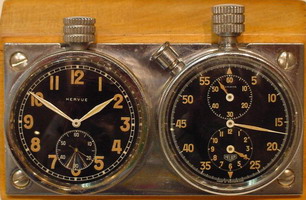
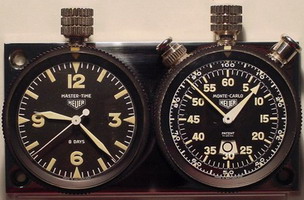
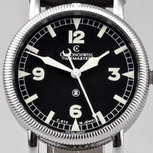
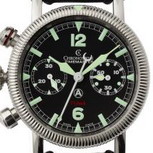
But I said that there were a couple of "interesting" Heuers at the show, so let's have a look at these:
So What Does This Mean? Trying to get some perspective on what I saw at the show (and what I didn't see), some realities come into focus:
And in Conclusion. The IWJG show this past Monday was a blast. I met several folks who had previously been e-mail buddies or voices on the phone; I also enjoyed meeting some new vintage collector / dealer "friends" who were happy to show off their watches and share some very interesting information and perspectives. It was also a unique opportunity to see some very rare watches, in-the-metal . . . watches that a vintage collector living in Atlanta, Georgia could never hope to see. But, in the end, I felt like a spectator of the "real" show, like an outsider looking in. It was a wonderful show to see, but I can't even pretend to have been a participant in this show (or to have even understood what I was seeing). You see, the show was about the Rolexes and Pateks, with "everything else" taking on a minor role and feeling very unimportant to the business at hand. Still, it was nice to be on the stage with the big boys, fun to mix and mingle among the stars, to see the "Ben Franklins" and to try on some rare ones. All in all, a fantastic way to spend three hours, a wonderful way to get some new perspectives on this strange hobby of collecting the old watches. But Wait, There's One Last Analogy. As I thought back about the IWJG show, and the feeling of being a "Heuer guy" in a room full of Rolexes, it reminded me of some previous experiences in the vintage automobile world. [Hey, what good watch report can you write without at least one automotive reference!!] Each August, in Monterey, California, there is a fantastic vintage automobile weekend -- four nights of auctions, two days of races, the Pebble Beach Concours, the Concorso Itiliano. These events are exciting, but some would say that -- for the car enthusiast -- the streets of the Monterey Peninsula provide just as much entertainment over the weekend. Everywhere you look, the sights and sounds of amazing vintage autos (and a few modern ones, as well). I have attended several of these weekends, with my cousin who races his vintage Boss 302, Dodge Challenger, Penske Camaro, and AMC Javelin (all factory cars, with reliable pedigrees), as well as a Dekon Monza and Shelby Mustang. So what's it like being a "Muscle Car" guy, on the Monterey Peninsula for a weekend, with all the Ferrari and Bugatti guys? Can we be excited about an old Shelby, sold at auction for a mere $KKK, when the Ferraris are fetching five times that amount?
|
 |
 |
 |