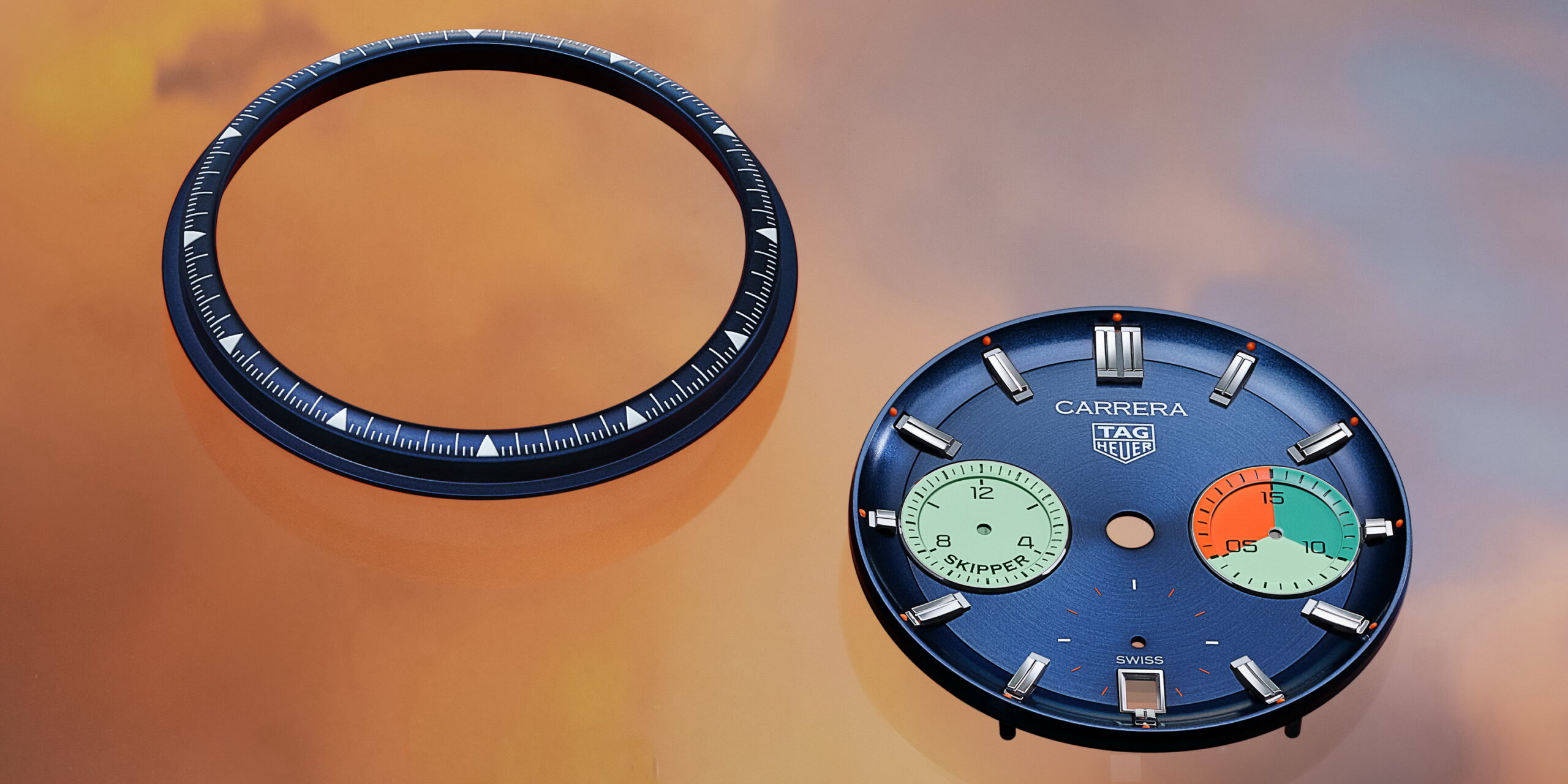
TAG Heuer introduced its “Glassbox” case for the Carrera in 2015 and produced 10 versions of the Carrera using this case, the last one coming in 2023. Here is our posting that provides an overview of all 10 first generation Glassbox Carreras — Retrospective — The “First Generation” Glassbox Carrera Chronographs (2015 to 2023)

After producing 10 versions of the Carrera with the “first generation” Glassbox case, TAG Heuer introduced the second generation of the Glassbox Carrera in March 2023. There were two “launch models” of the second generation Glassbox Carrera, one with a “reverse Panda” paint scheme and one with a solid blue dial.

The defining features of the Glassbox case are a highly-domed crystal that rests directly on the mid-case (there being no top bezel for the case) and two flanges (rings) placed between the center section of the dial and the crystal. The inner flange (chapter ring) is attached to the center section of the dial and is concave (bowl-shaped). The outer flange is convex, sloping downward from the point where it meets the inner flange and going all the way to the edge of the case.
One criticism of the first generation Glassbox crystal / case construction is that from certain angles the crystal created distortion, in the form of a milky, white ring that blocked the view of the chapter ring.

The domed crystal of the second generation Glassbox Carrera addressed this weakness of the first generation models as it offers excellent visibility to the three surfaces that it covers – dial, inner flange and outer flange. There are minimal “blind spots” and distortion with this crystal.
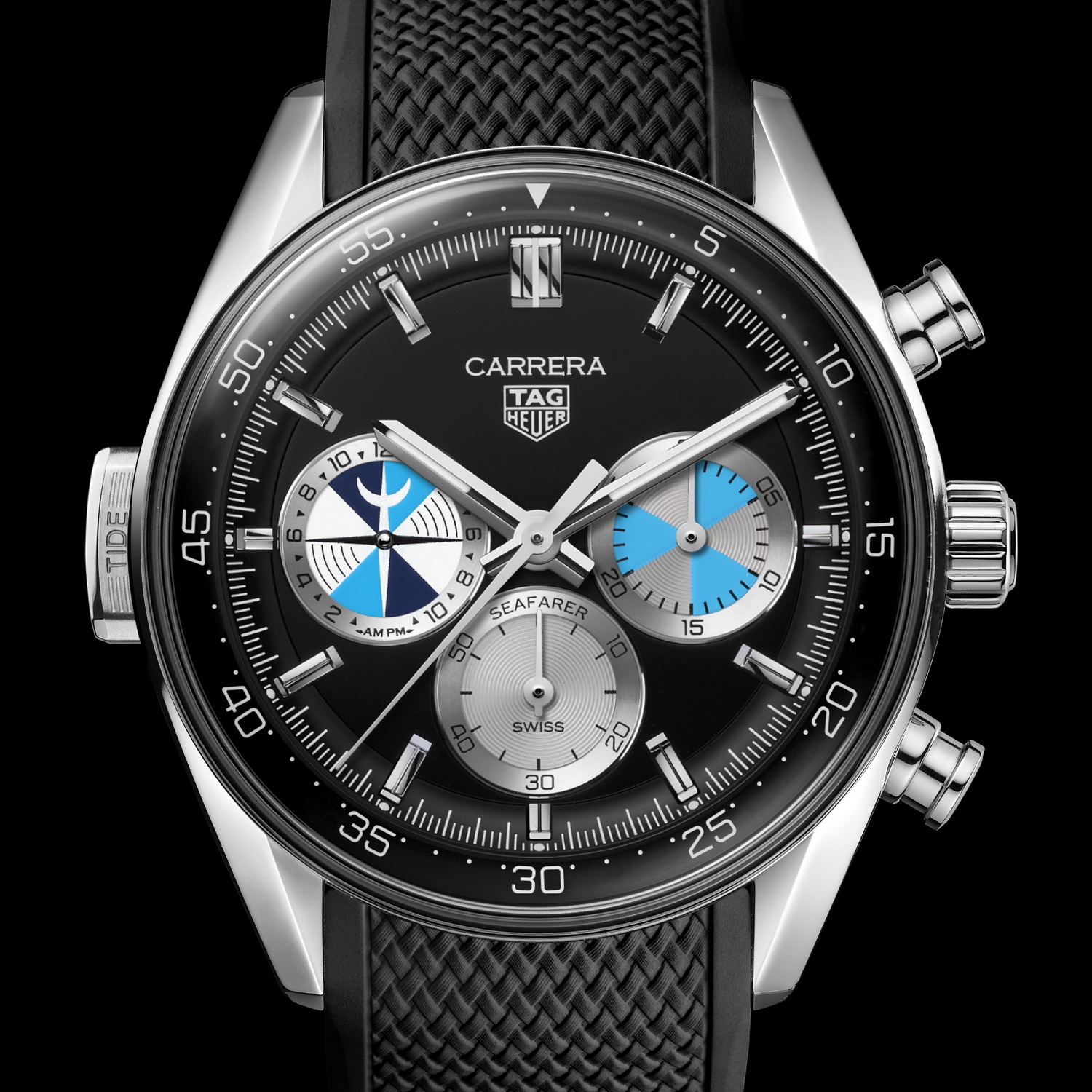
The second generation Glassbox crystal also evokes the type of plastic crystal that was used on vintage versions of the Carrera, making it an ideal choice for homage and re-issues of the original models.
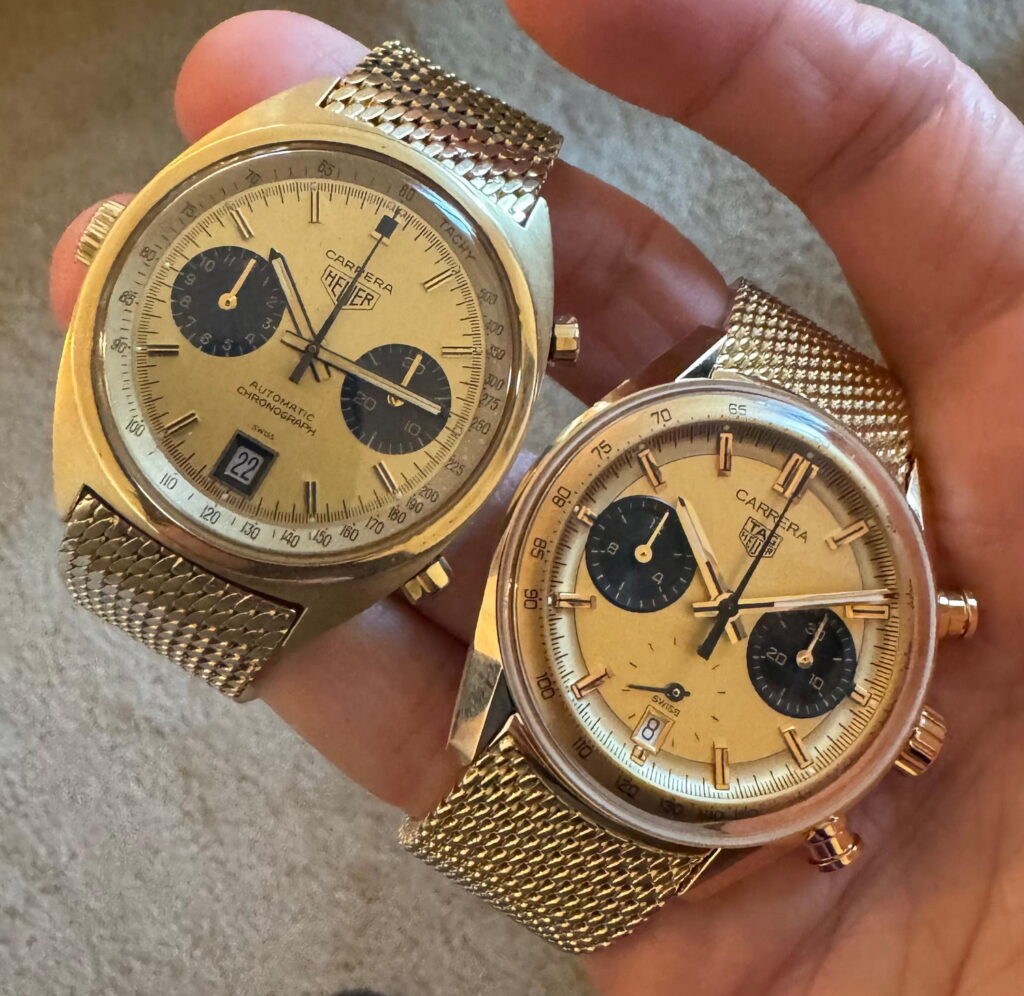
Most models of the second generation Glassbox Carrera measure 39 millimeters across the dial (as shown on the right below), although TAG Heuer has also produced 42 millimeter cases that use the same Glassbox construction (shown on the left below).
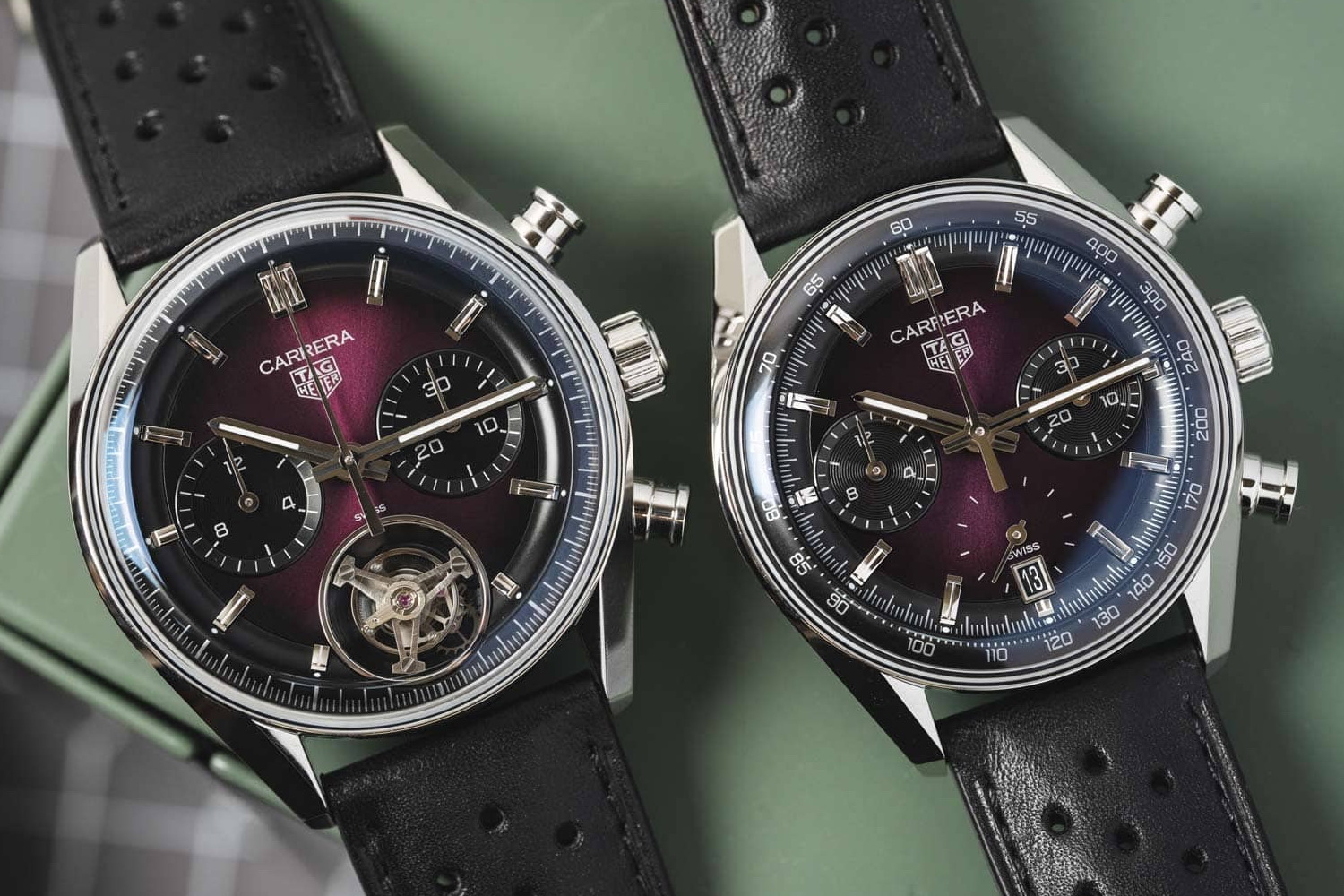
With that introduction, we can begin our topographical tour of the dial and flanges of the second generation Glassbox Carrera.
Part 1 – The Center of the Dial. We start the tour of at the center of the dial. Not surprisingly, this center section is flat, other than the registers.
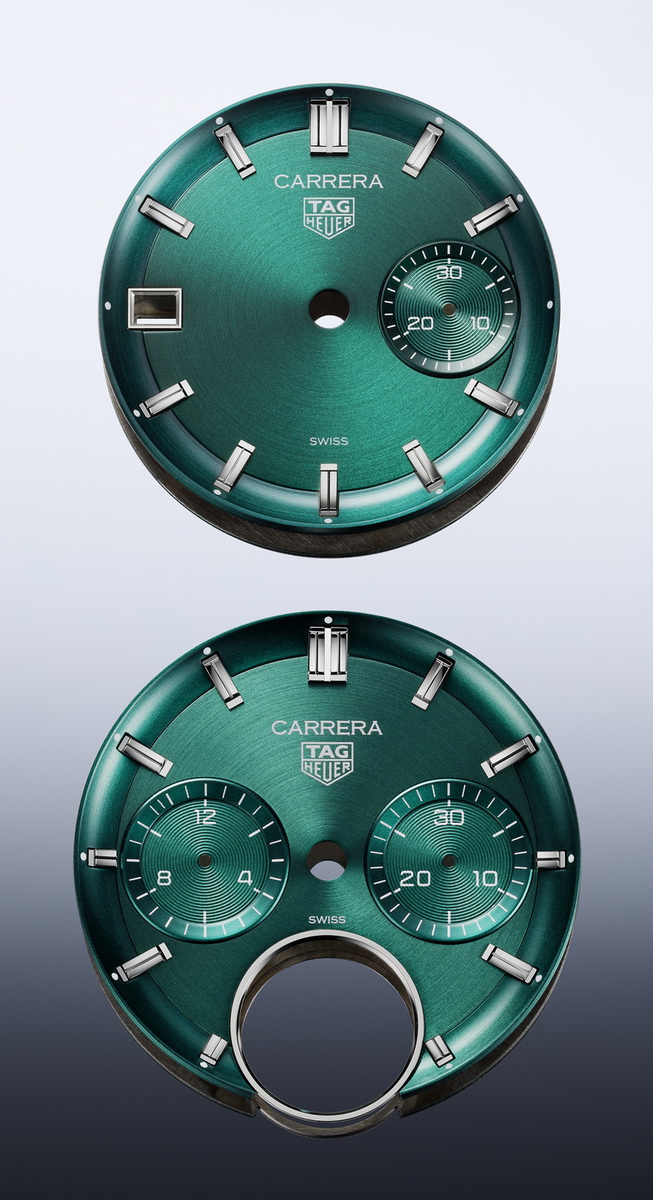
Part 2 – The Inner Flange (Chapter Ring). Moving out from the center of the dial, we soon arrive at what TAG Heuer calls the “inner flange” (and others might also call a “chapter ring” or “inner ring”).
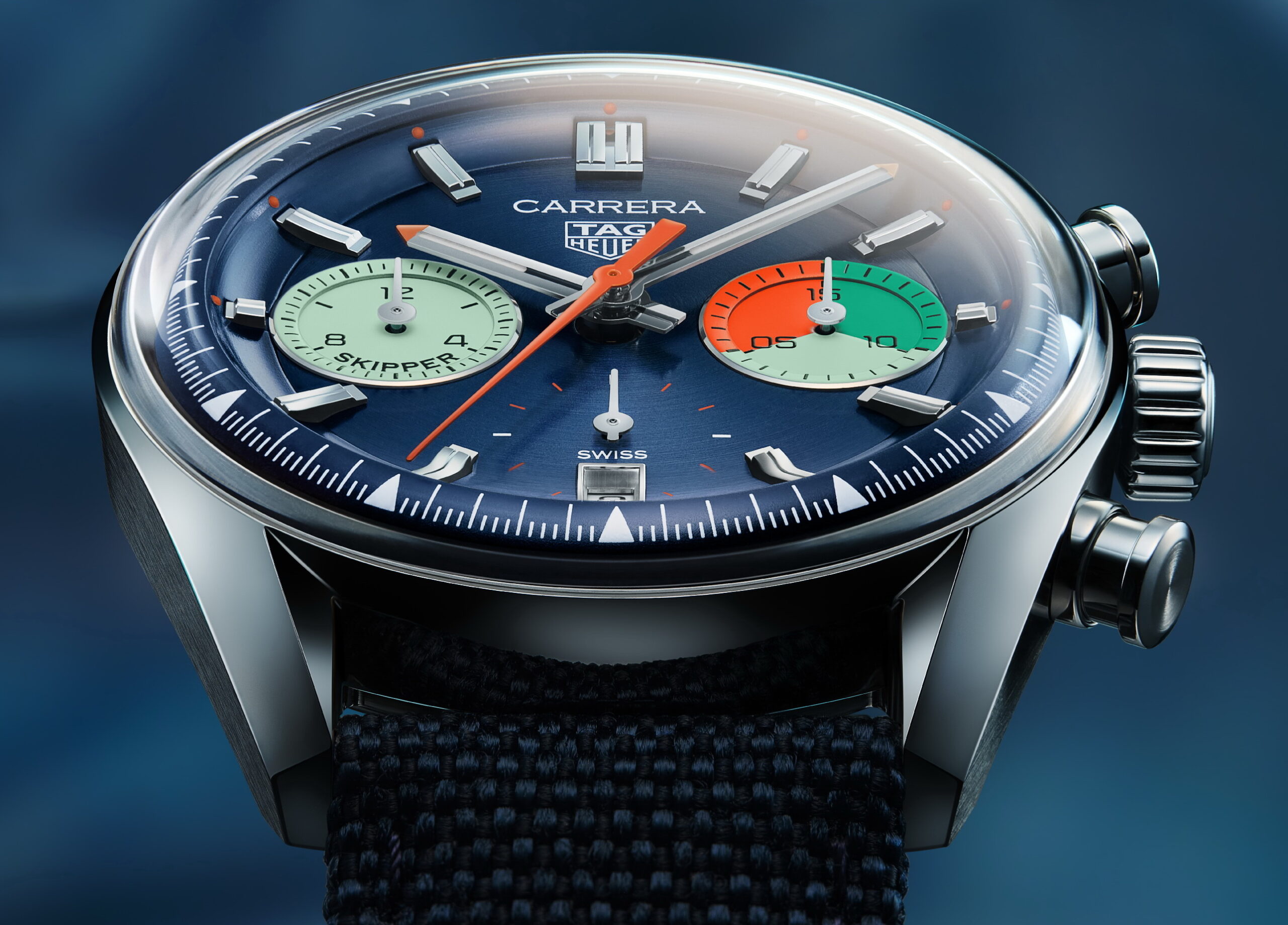
This inner flange is concave (bowl) shaped, rising dramatically as it moves away from the center of the dial. The combination of the center section of the dial and this inner flange combine to create something of a “pie pan”.
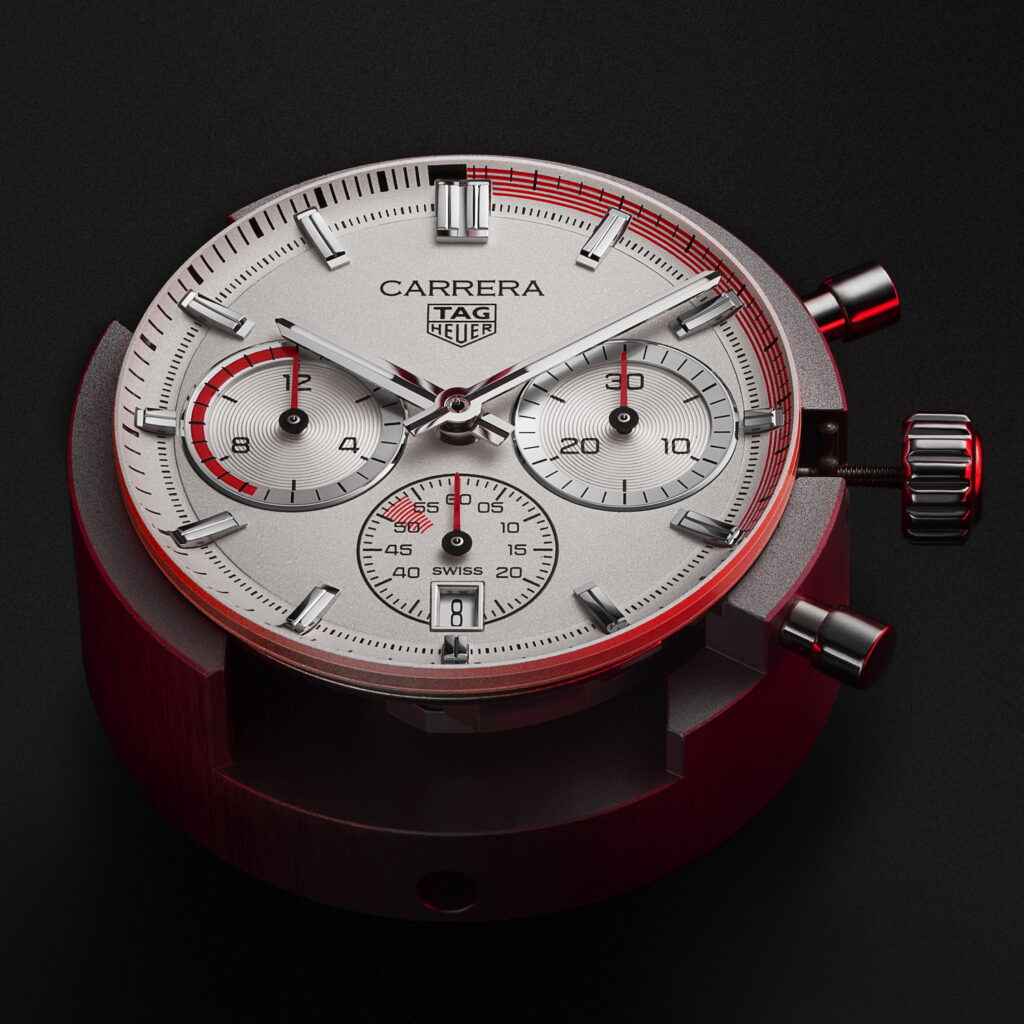
On most Glassbox models, polished indices for the hour markers serve as a bridge to connect the center section of the dial with this inner flange. The inner flange is usually printed with hashmarks for seconds (minutes) and 1/4 seconds; on some models, however, this inner flange is left blank.
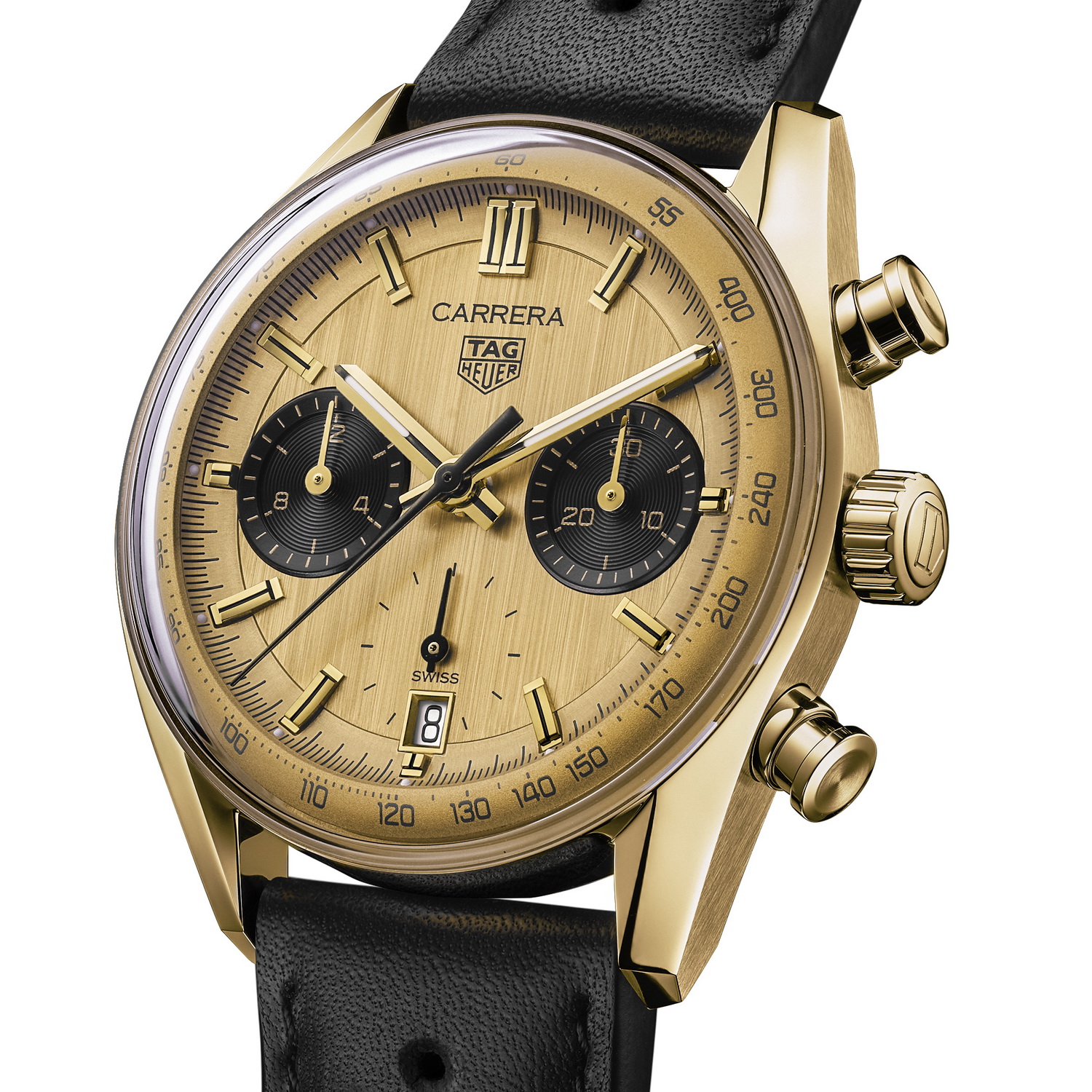
Part 3 – The Outer Flange. At the peak of the concave inner ring, we encounter the most mysterious element of the second generation Glassbox Carrera, which TAG Heuer calls the “outer flange”.
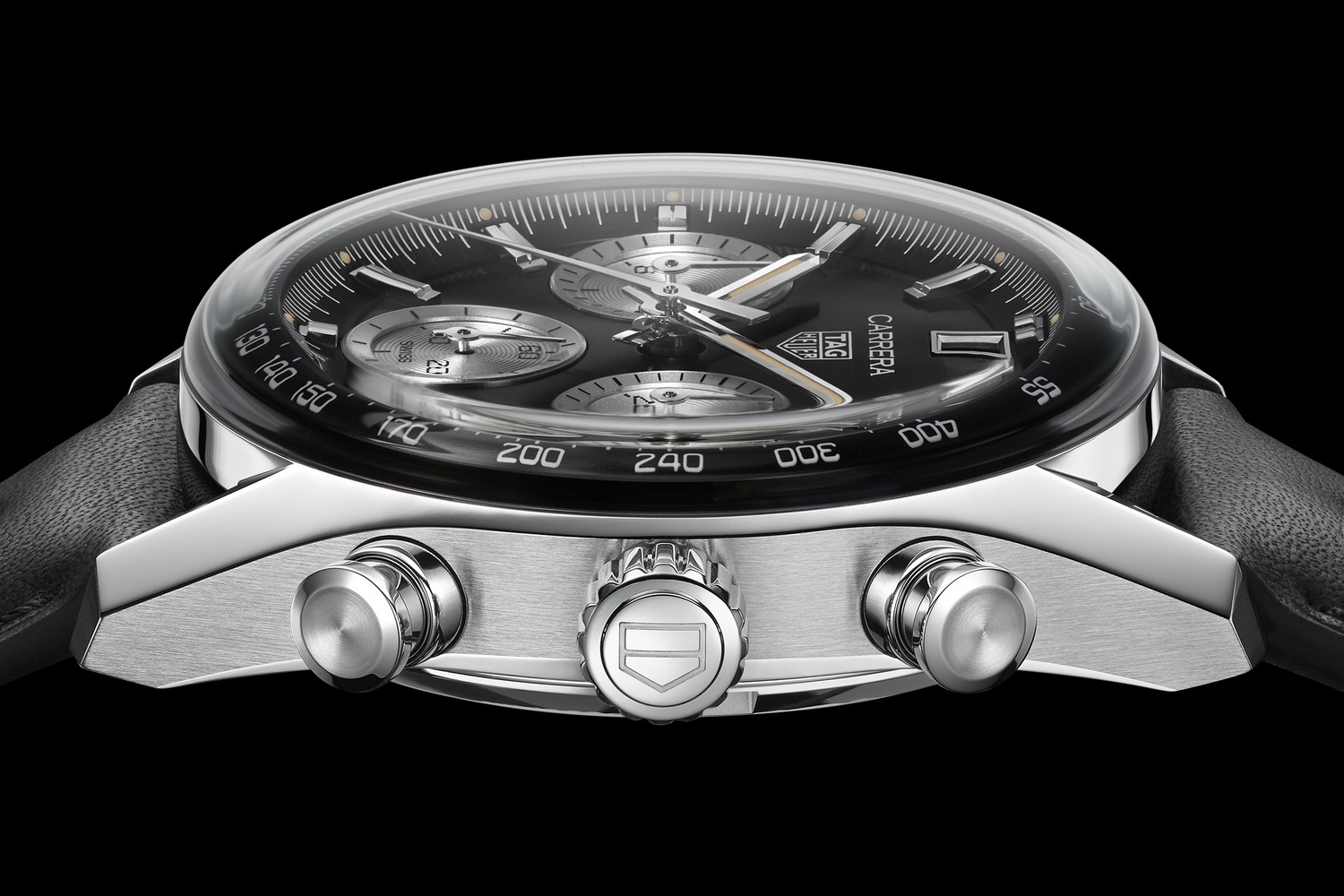
This outer flange is convex (rounded outward) and descends dramatically, as we move further away from the center of the dial, serving to create the outer edge of the dial / flange area. On most models, the outer flange is printed with a tachymeter scale, however there are models where it is printed with hashmarks for seconds (minutes) and 1/4 seconds.
Together, the inner flange and the outer flange offer something of a skate park, with dramatic elevation changes all along the way.
Part 4 – The Crystal. The inner and outer flanges give the dial very engaging depth, but it’s the deeply domed sapphire crystal that presents the dramatic view of all this topography.
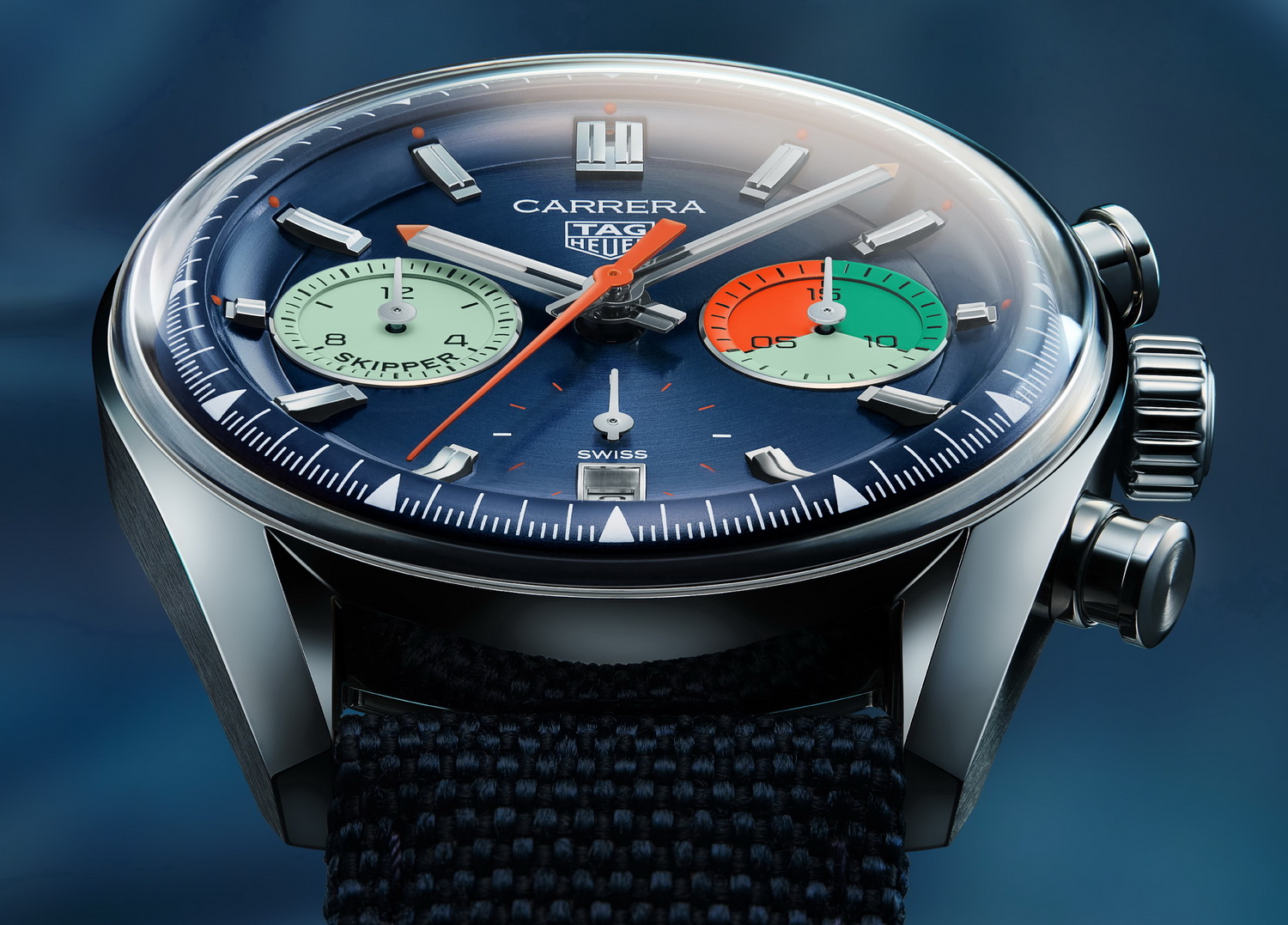
Whereas the domed crystal of the first generation Glassbox Carreras created distortion from many angles, the crystal of the second generation Glassbox Carreras serves as a perfect lens to enhance and dramatize the elements that it covers.
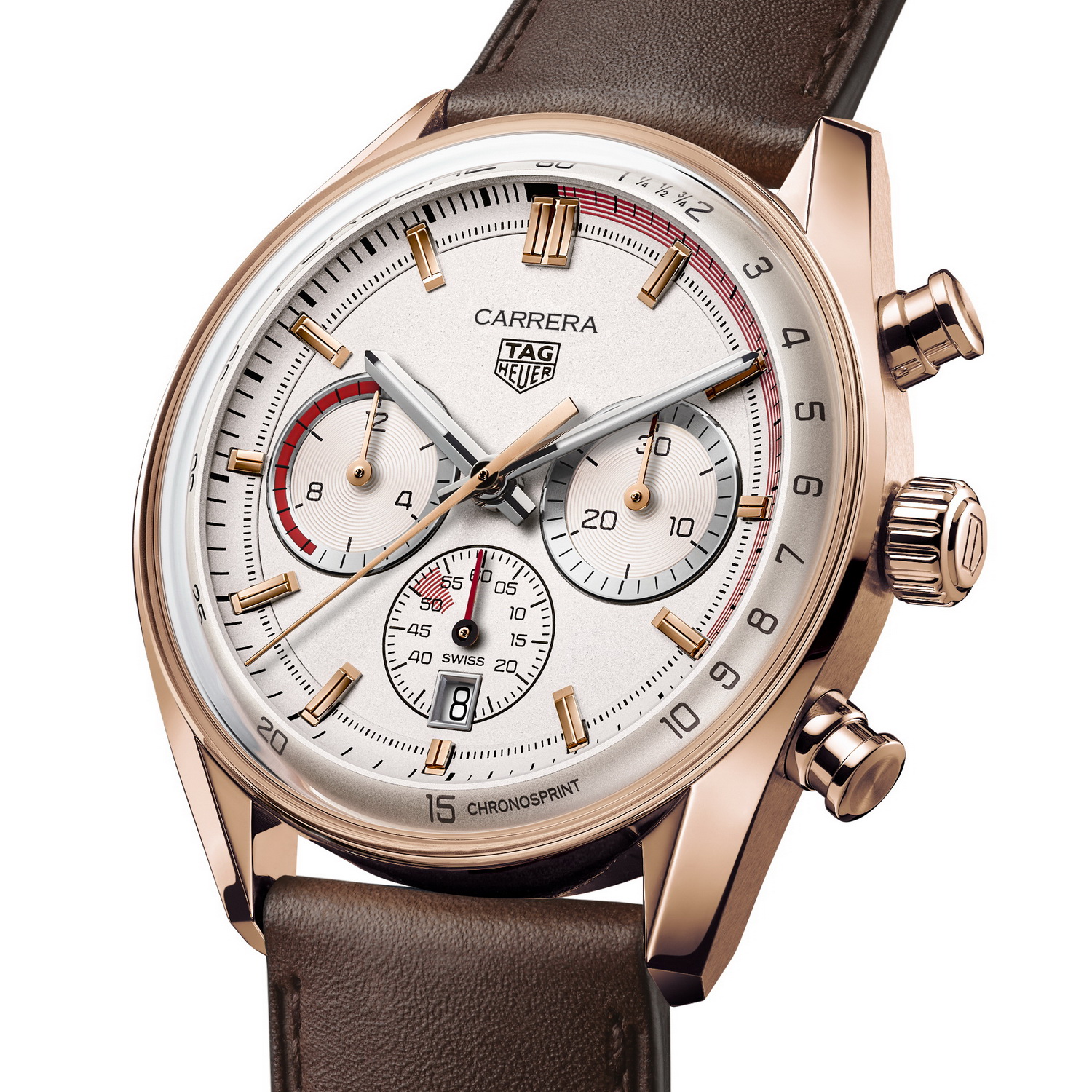
This crystal is wide – the case has no bezel, so the crystal actually goes from edge to edge, resting on what we would normally call the “mid-case”. The crystal is deep – yes, it requires a depth of approximately 3.0 millimeters to cover the outer flange. The crystal is precise – with the outer area of the crystal being parallel to the outer flange, it enhances the legibility of the marks or numerals regardless of the angle of view. This magical crystal offers an excellent solution for those who demand utmost legibility, while evoking the romance of the crystals that Heuer used in the 1960s and 70s.
Jeff Stein
November 27, 2025