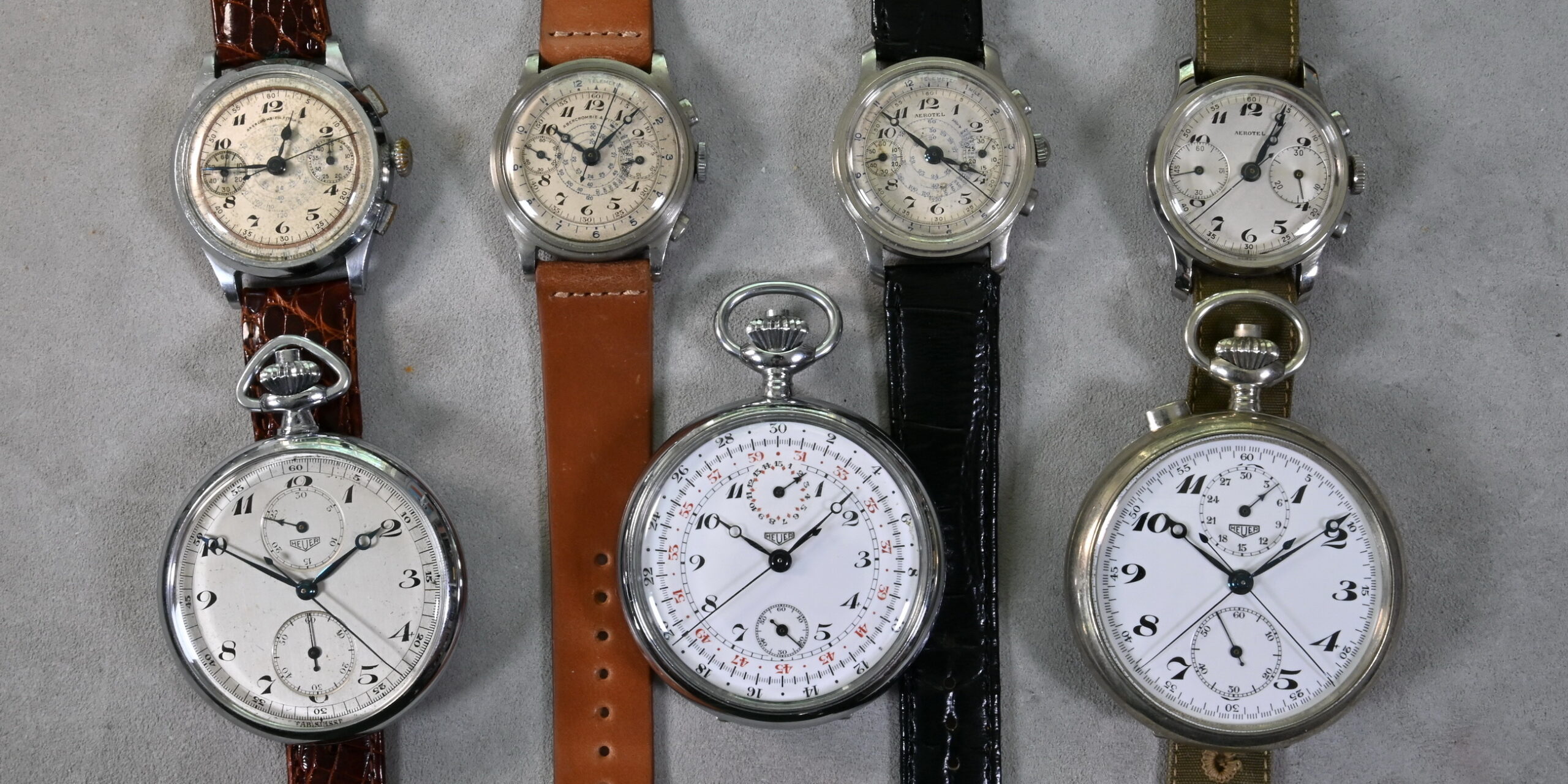
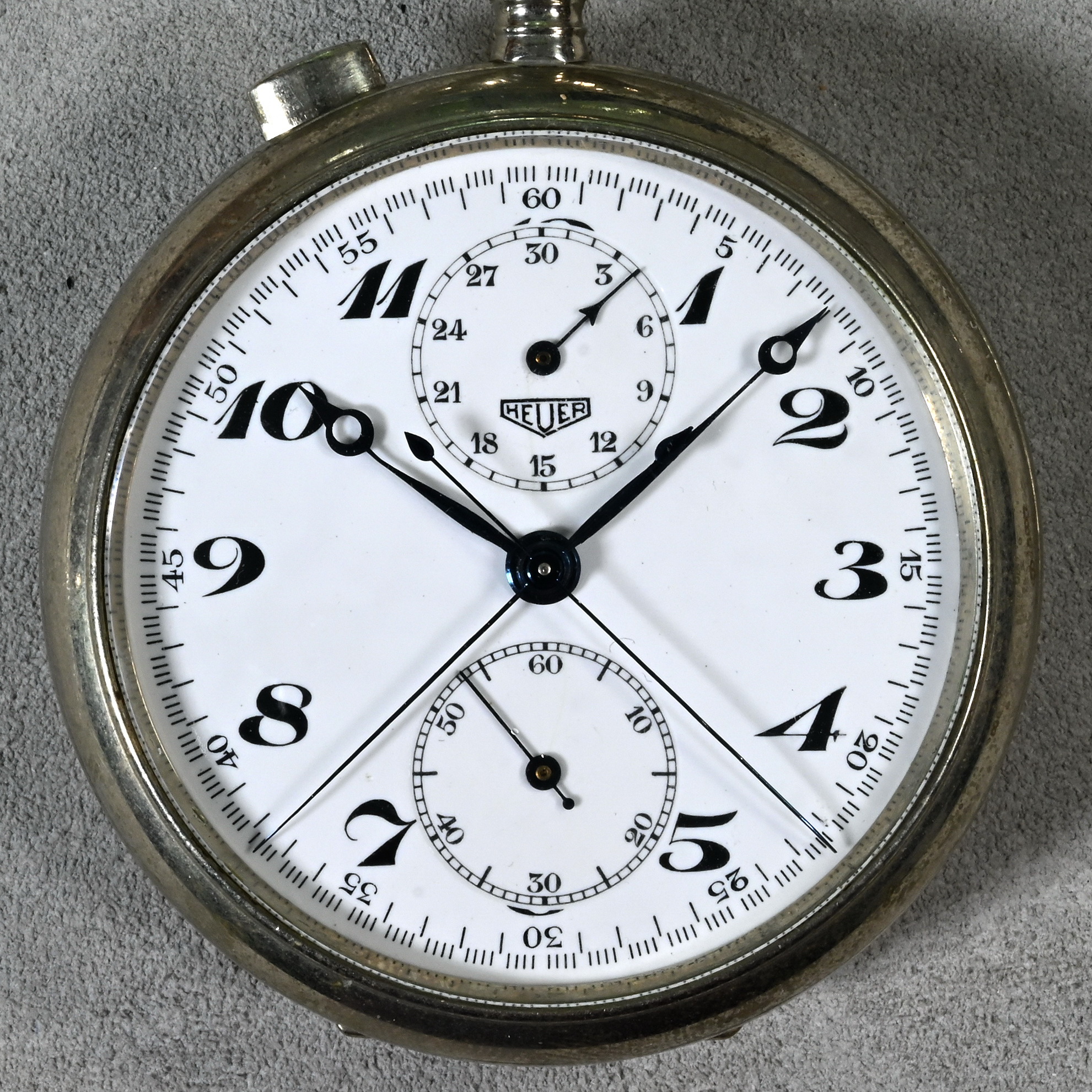
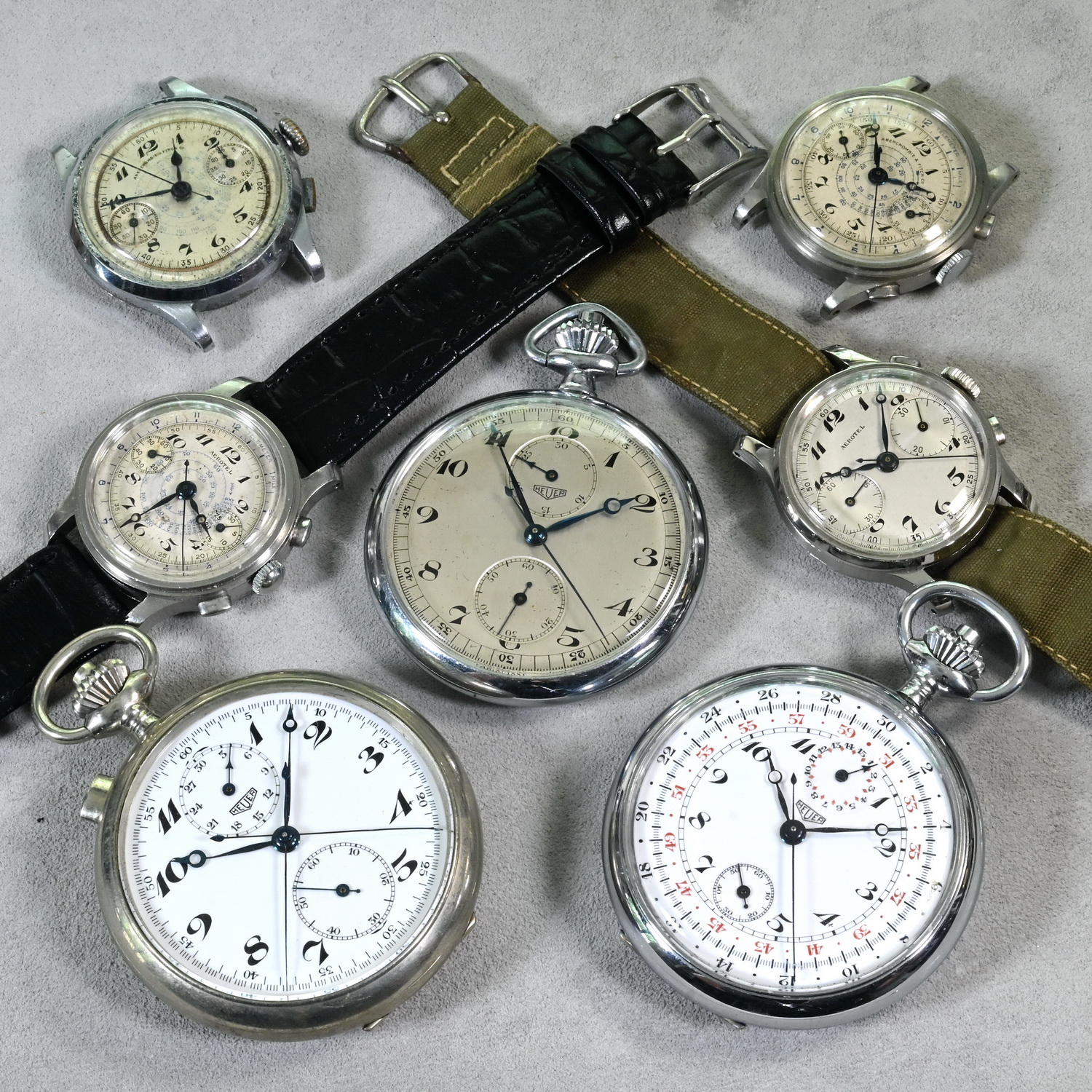
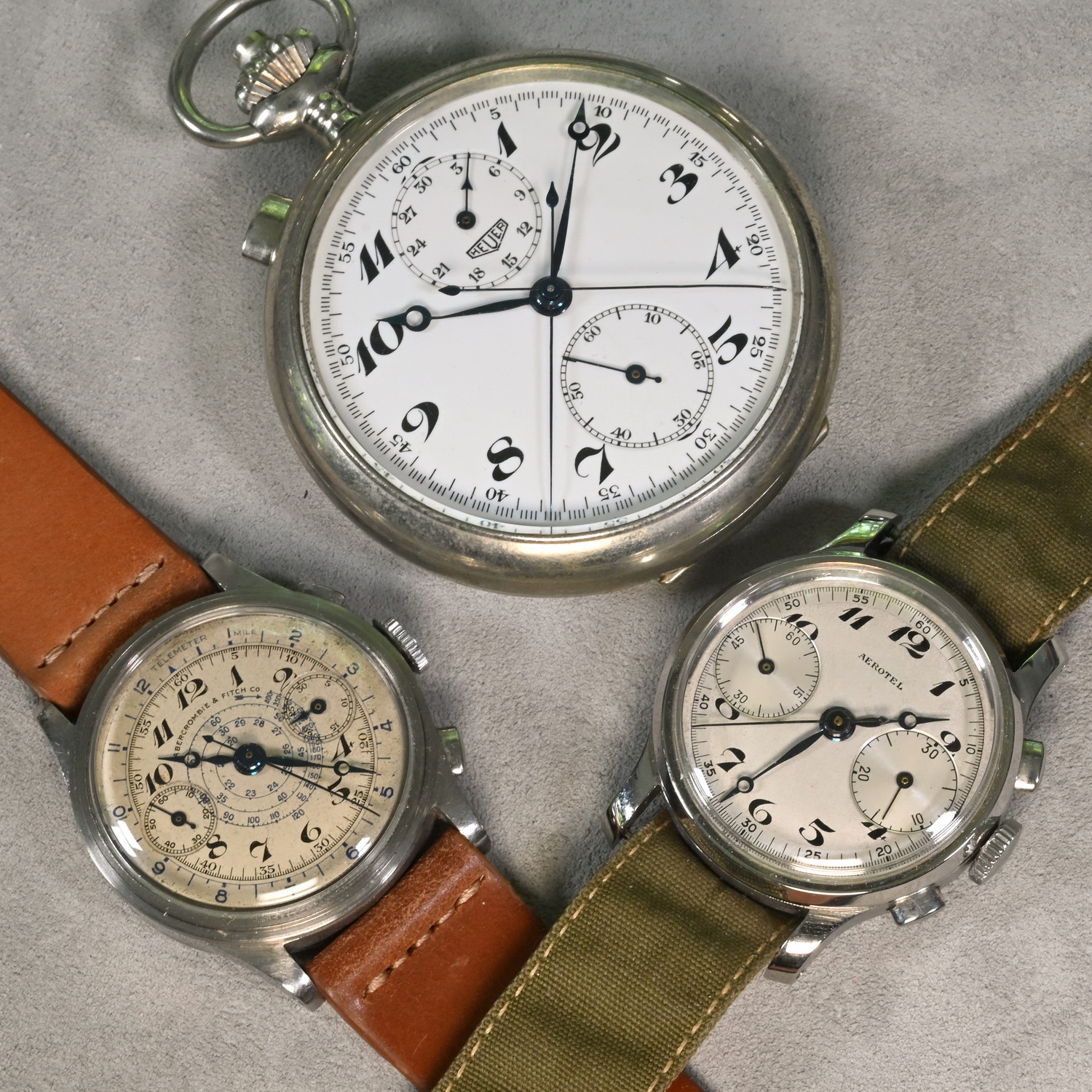
Last week, a reader asked about Heuer’s use of “Breguet-style” numerals and hands in the timepieces that the company produced in the 1930s. To explore the subject, I put together a group of seven timepieces, including three chronographs that Heuer made for Abercrombie & Fitch and Aerotel and three Heuer-branded pocket chronographs. Because it uses Breguet-numerals, I also included one chronograph made by Angelus for Abercrombie & Fitch, circa 1938, which was likely before Heuer began producing watches for A&F.
Heuer’s Styles Over the Decades
Perhaps the evolution in styles of Heuer’s timepieces is easiest to observe by looking at the pocket chronographs that the company produced from the late 19th century through the 1970s (at which time electronic timing took over). Consider the styles that Heuer incorporated into the seven pocket chronographs shown below (circa 1890 to 1960) and we easily see changes over the decades.
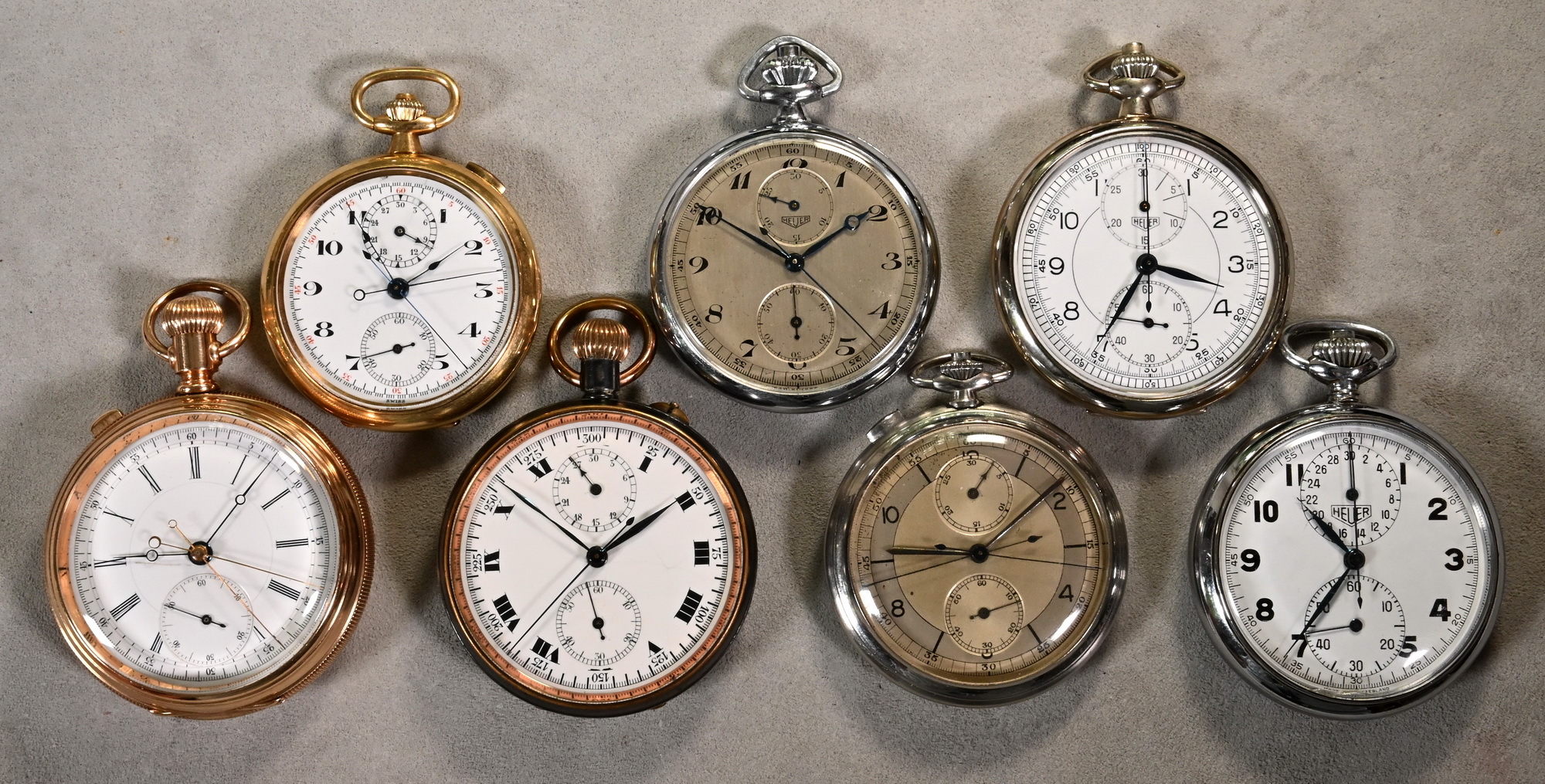
The Edwardian / Belle Epoch style (circa 1890) transitioned toward an elegant, but more utilitarian style (circa 1915), and that soon gave way to a more scientific / instrument style, with heavy Roman numerals (circa 1925). Modernism and more architectural style arrived with sector dials that used art deco numerals (circa 1935), followed by the laboratory / gauge style in the 1940s, and then the heavy Arabic numerals and bright white dial that made the chronographs ideal for sport or military timing.
Of course, beyond the changes in the dials and hands, we see changes in case materials and construction that reflected these same trends. These timepieces were designed to be used as “tools”, but they also reflect the styles and preferences of their eras. Compared with the changes in the way they looked, however, the movements that powered the watches and the complications they offered remained relatively stable from one decade to the next.
The Breguet Style
The Breguet-style timepieces of the mid-1930s come in the middle of this 70-year evolution. The Breguet-style numerals are streamlined, but retain some decoration / ornamentation that reminds us of earlier periods. The “Hollow Apple” Breguet hands show this same balance, providing both strength (legibility) and elegance. The Breguet numerals and hands seem equally comfortable on the small wrist chronographs of the mid-1930s (say, 32 millimeters) and the large pocket chronographs of the era (up to 52 millimeters). Whether for style or sporting, elegance or instrumentation, the Breguet style has remained popular over the decades.
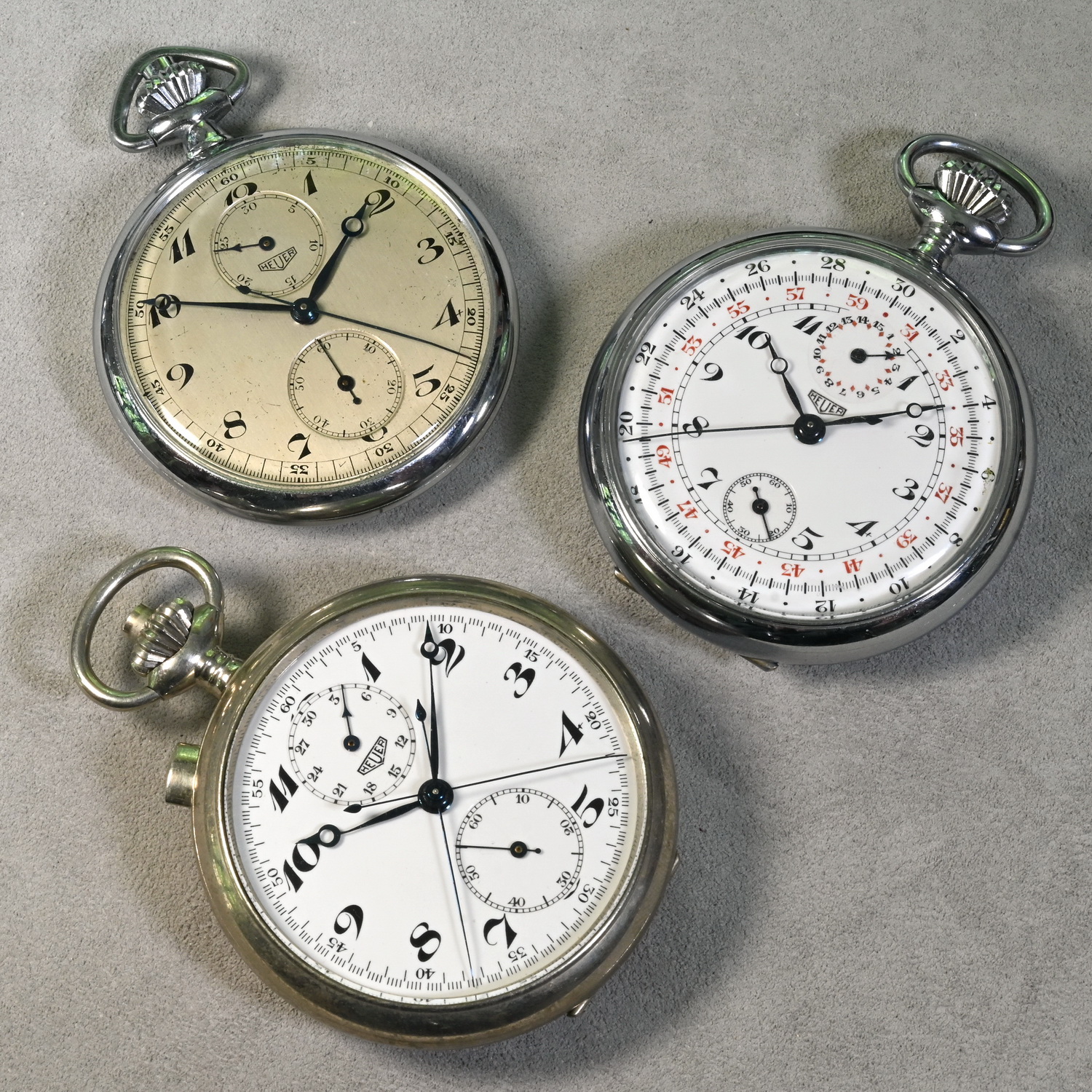
In this posting, we’ll have a look at seven timepieces from the 1930s — wrist chronographs and pocket chronographs — that capture the best of “Breguet-Style”.
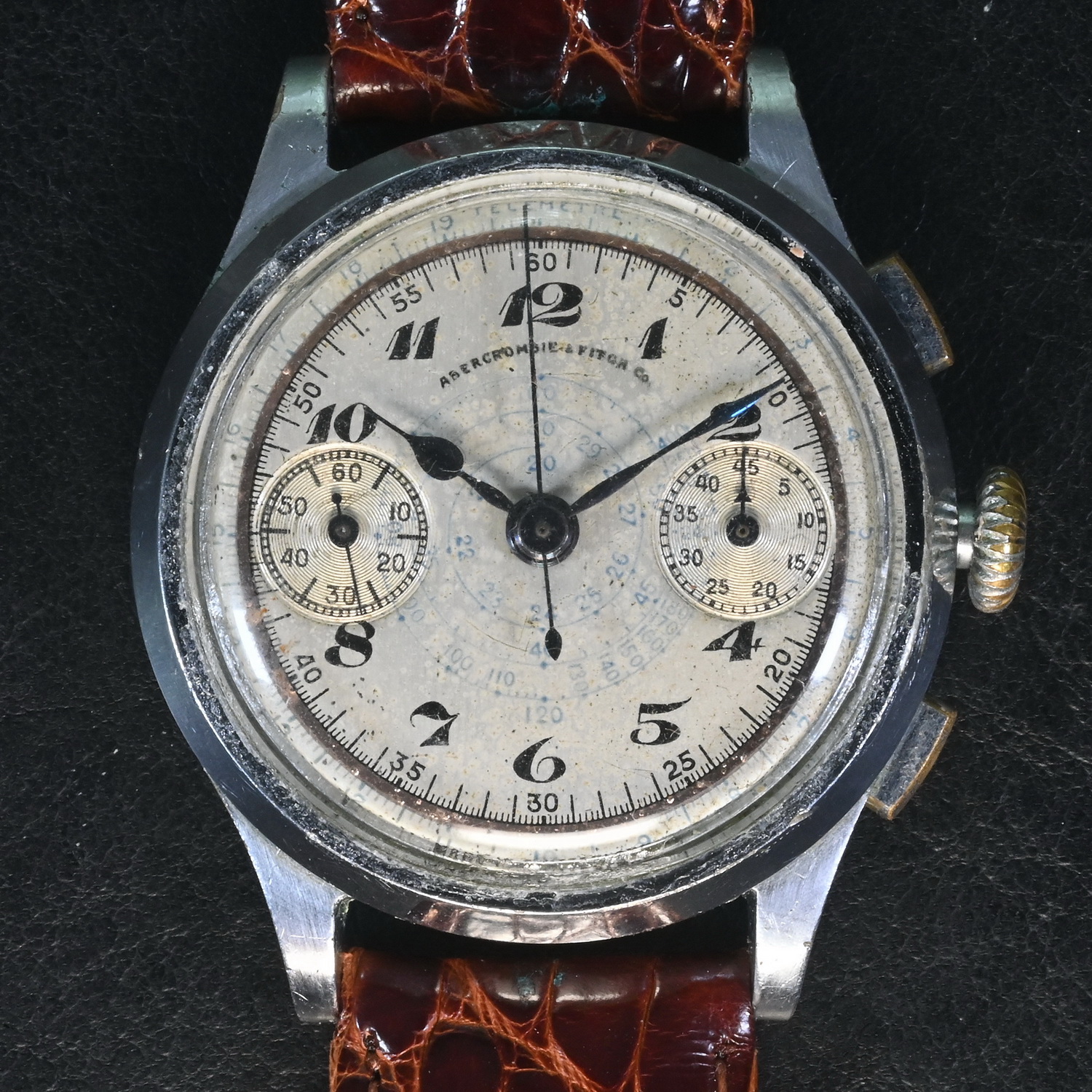
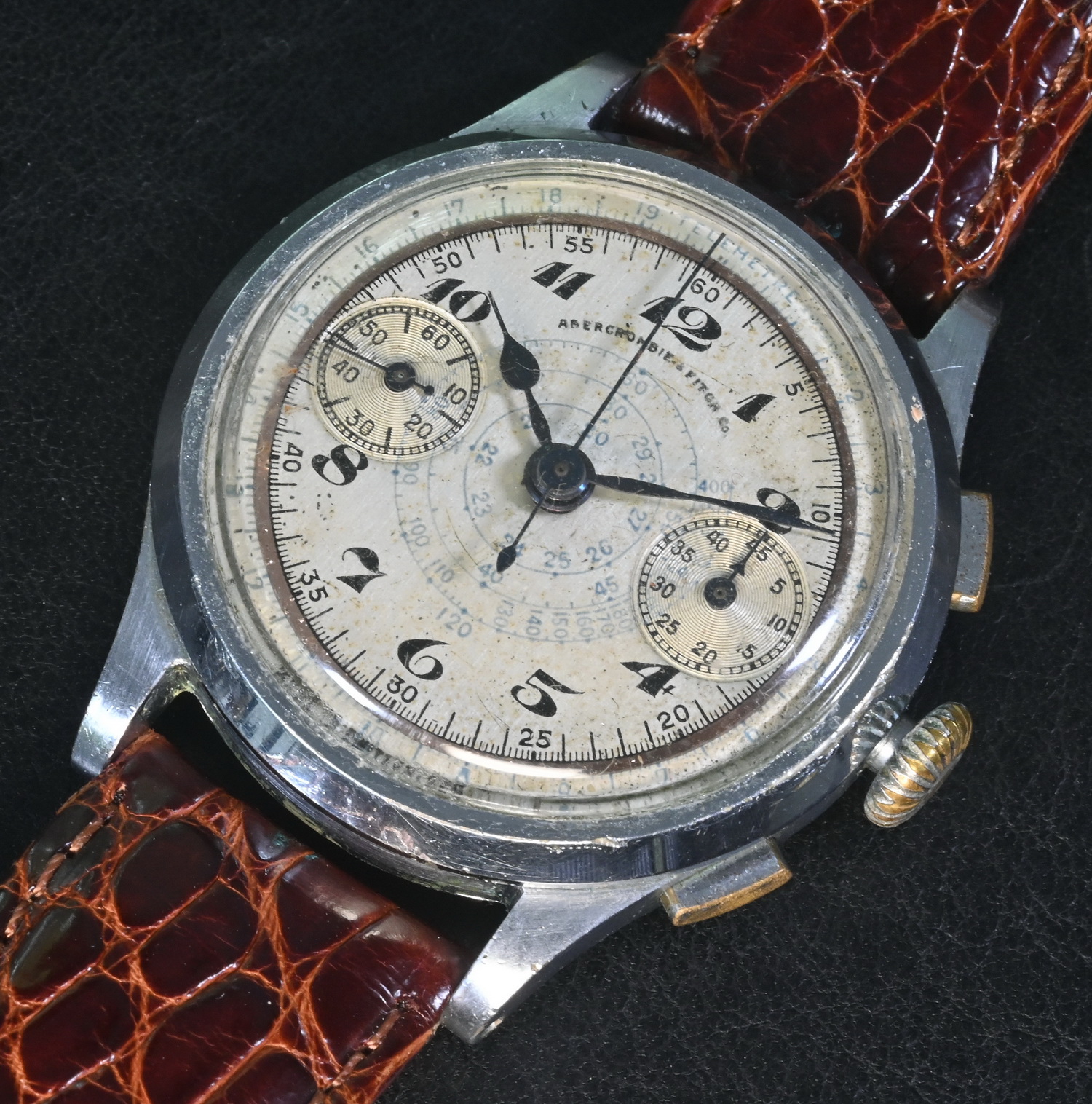
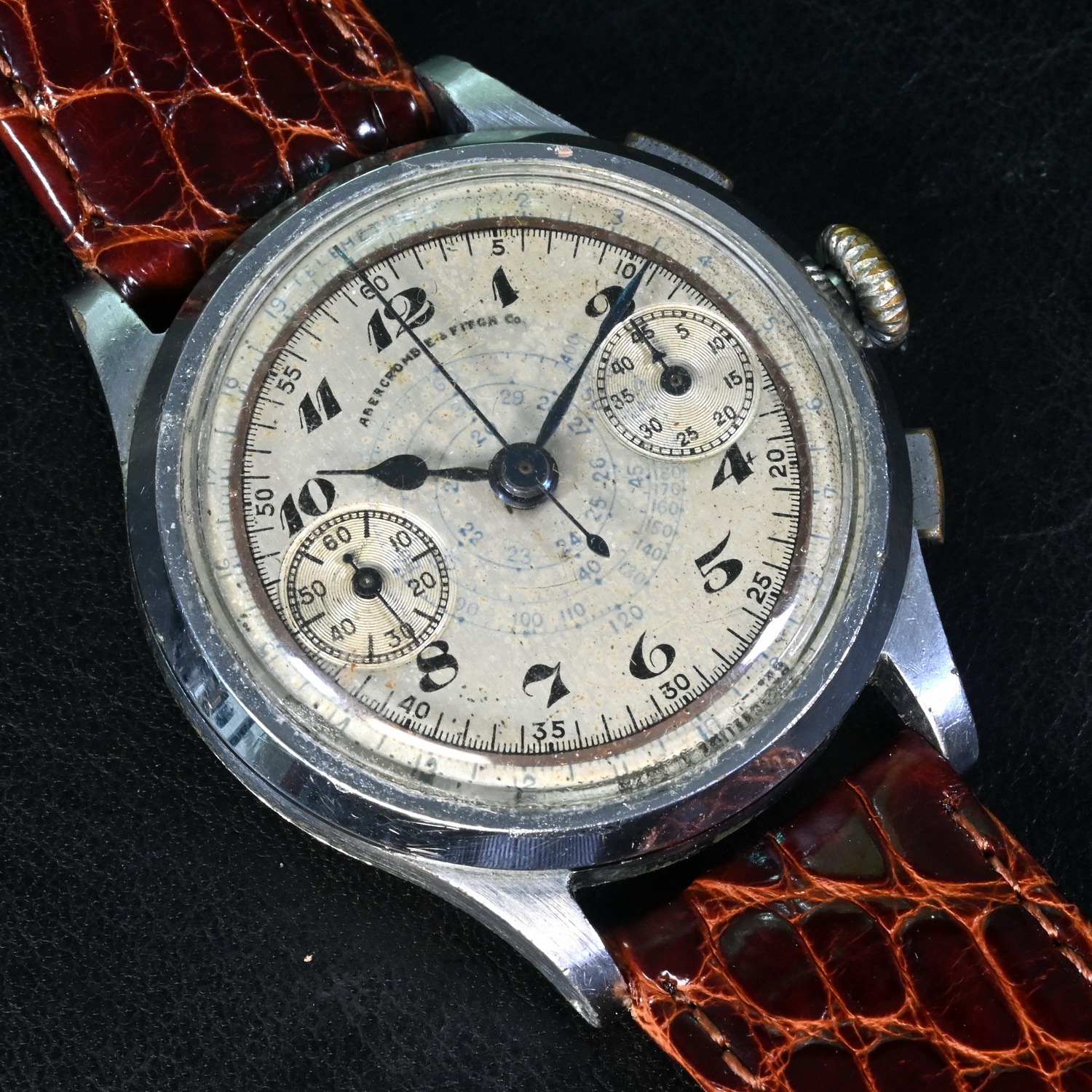
Abercrombie & Fitch Chronograph, made by Angelus
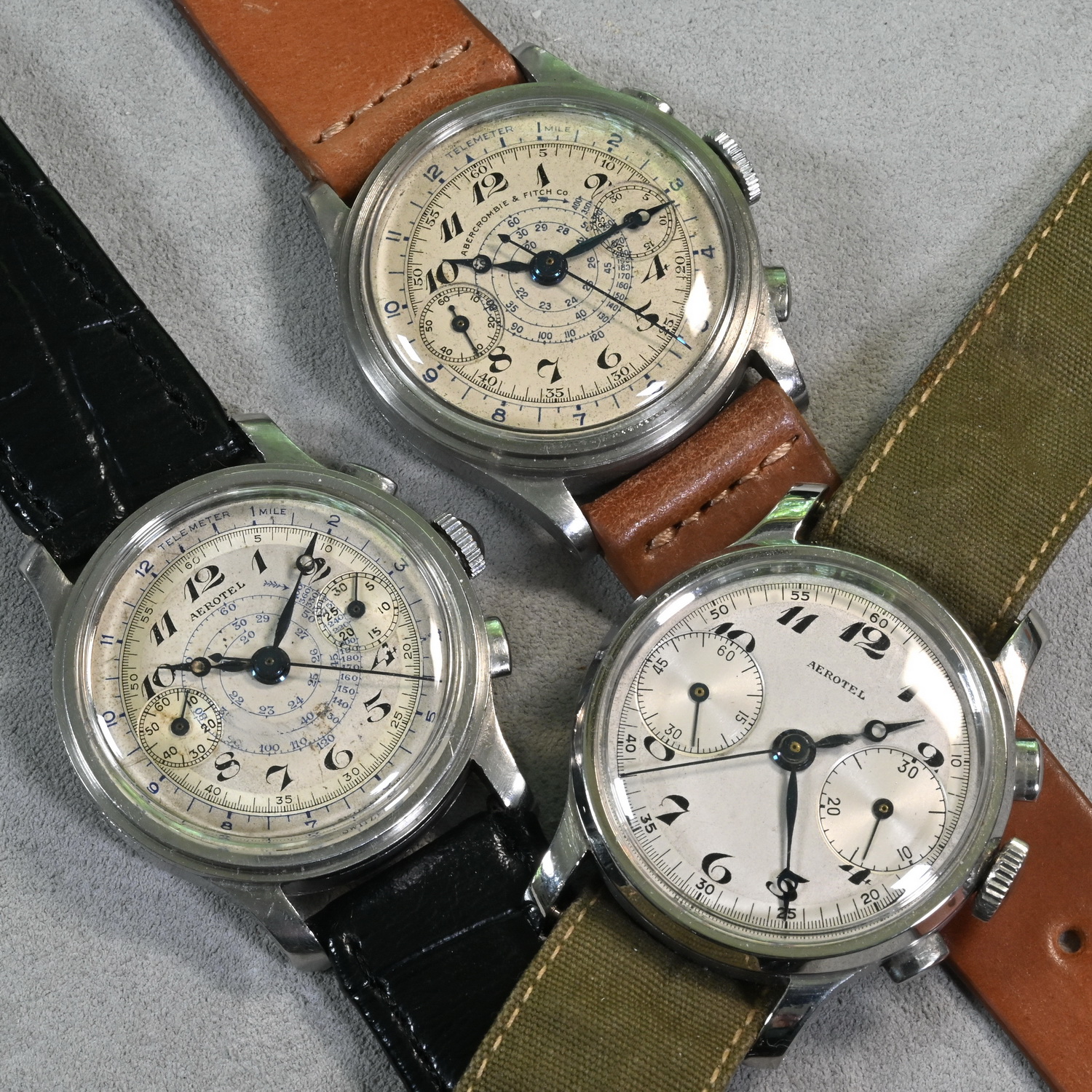
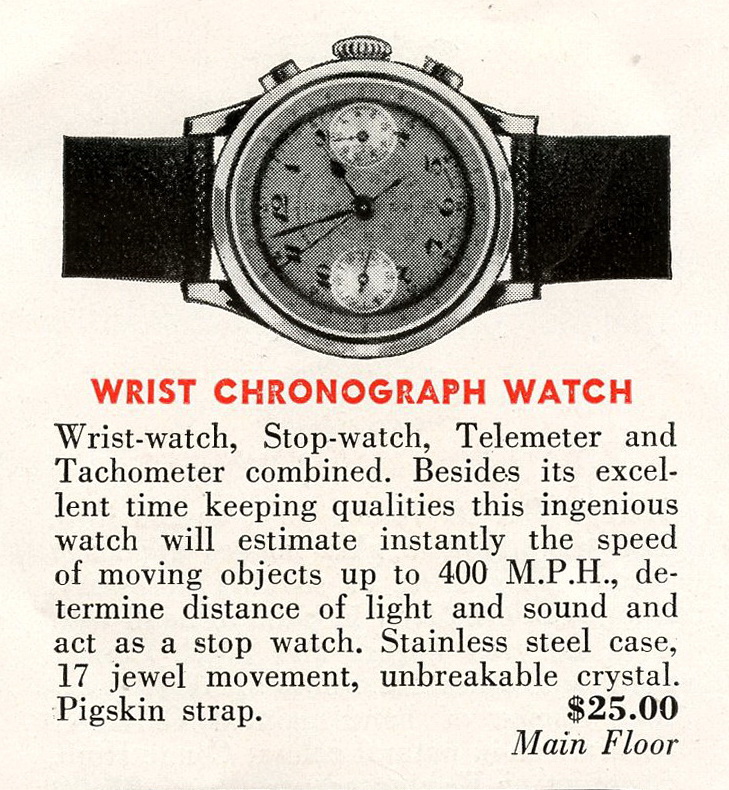
Heuer made chronographs and other timepieces for Abercrombie & Fitch from the 1930s into the 1970s, but earlier catalogs from A&F show timepieces made by a variety of companies other than Heuer. One of the most expensive items in the Abercrombie & Fitch 1938 Christmas catalog was a chronograph made by Angelus for A&F on a private-label basis. Perhaps trying to justify the $25.00 price, the catalog brags that this is a wrist-watch, stop-watch, telemeter and tachymeter combined.
Measuring a stout 35 millimeters across the dial, this chronograph was powered by one of the movements developed by Angelus, the SF 210.
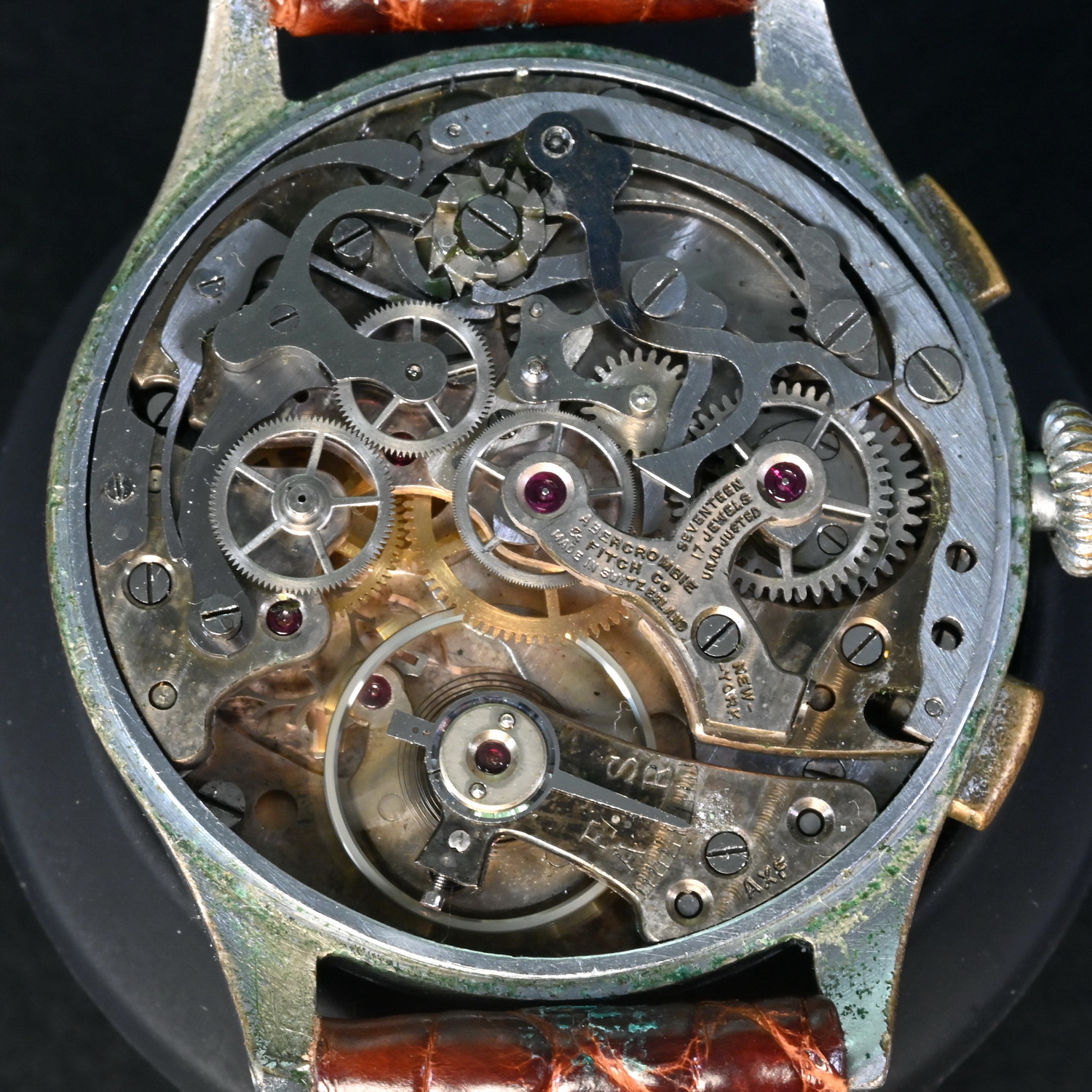
See additional photos of this chronograph and the 1938 Abercrombie & Fitch Christmas catalog HERE.
Abercrombie & Fitch Chronograph, Heuer Reference 2403, Tachymeter / Telemeter Dial
By the late 1930s, Abercrombie & Fitch had consolidated its sourcing of chronographs and other complicated timepieces in Heuer. A&F was outfitting its wealthy clientele for adventures (fishing, motoring, hunting, and climbing, for example), and always wanted top-quality timepieces. Accordingly, in producing timepieces for Abercrombie & Fitch, Heuer tended to use its most robust stainless steel cases with premium movements.
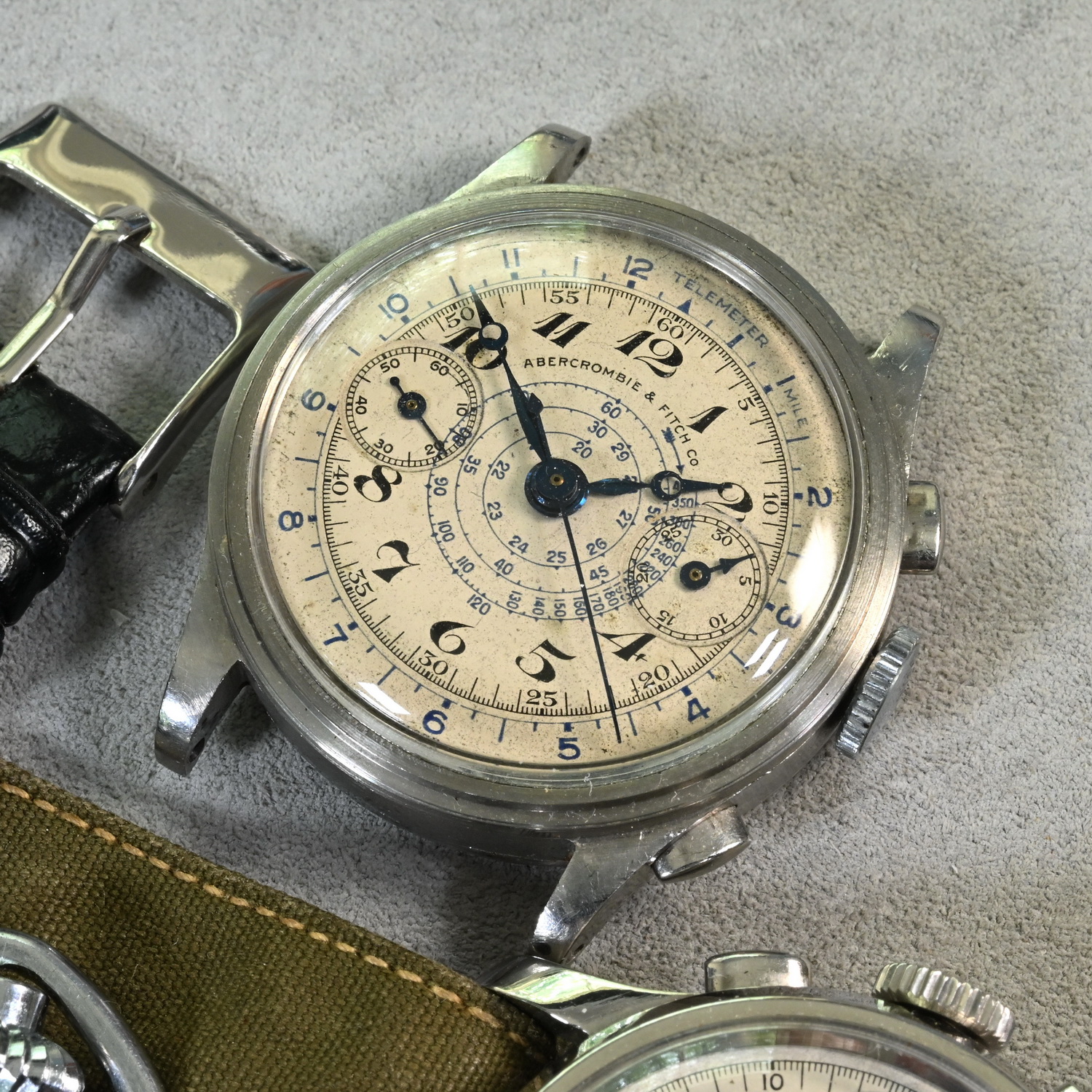
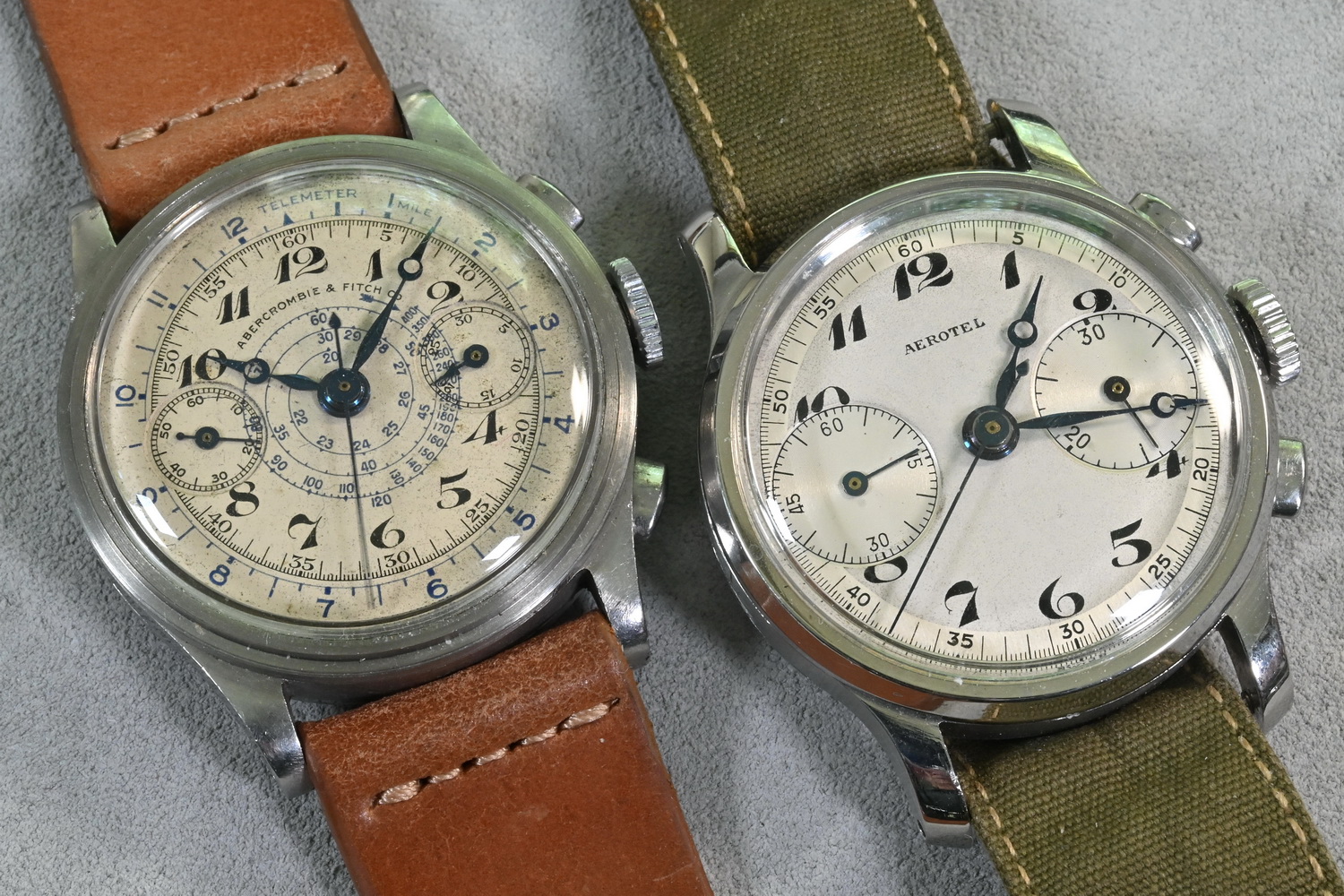
Heuer began using the Landeron 13 movement circa 1935, first incorporating the movement into the Reference 2403 case. This was a conventional-shaped, snap-back case (32.3 millimeters), with rounded lugs, and Heuer provided some variety with the use of four different types of bezels. The watch shown uses a “stepped” bezel, and the dial incorporates tachymeter and telemeter scales.
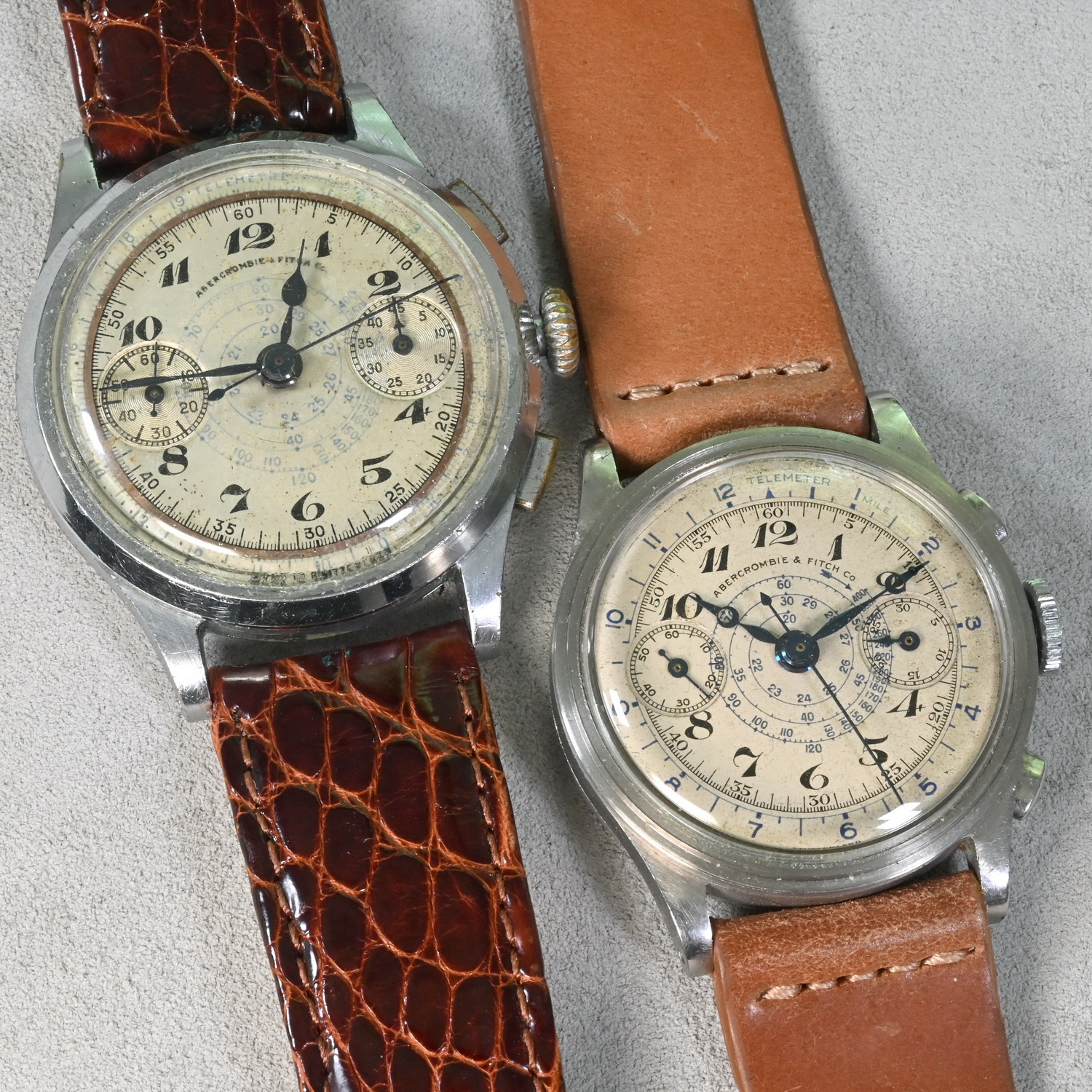
Seeing how the watches have aged over the years, it is fair to say that the switch from Angelus to Heuer served Abercrombie & Fitch well, in terms of both the watches’ style, construction and durability.

See additional photos of this chronograph in our OnTheDash Gallery HERE.
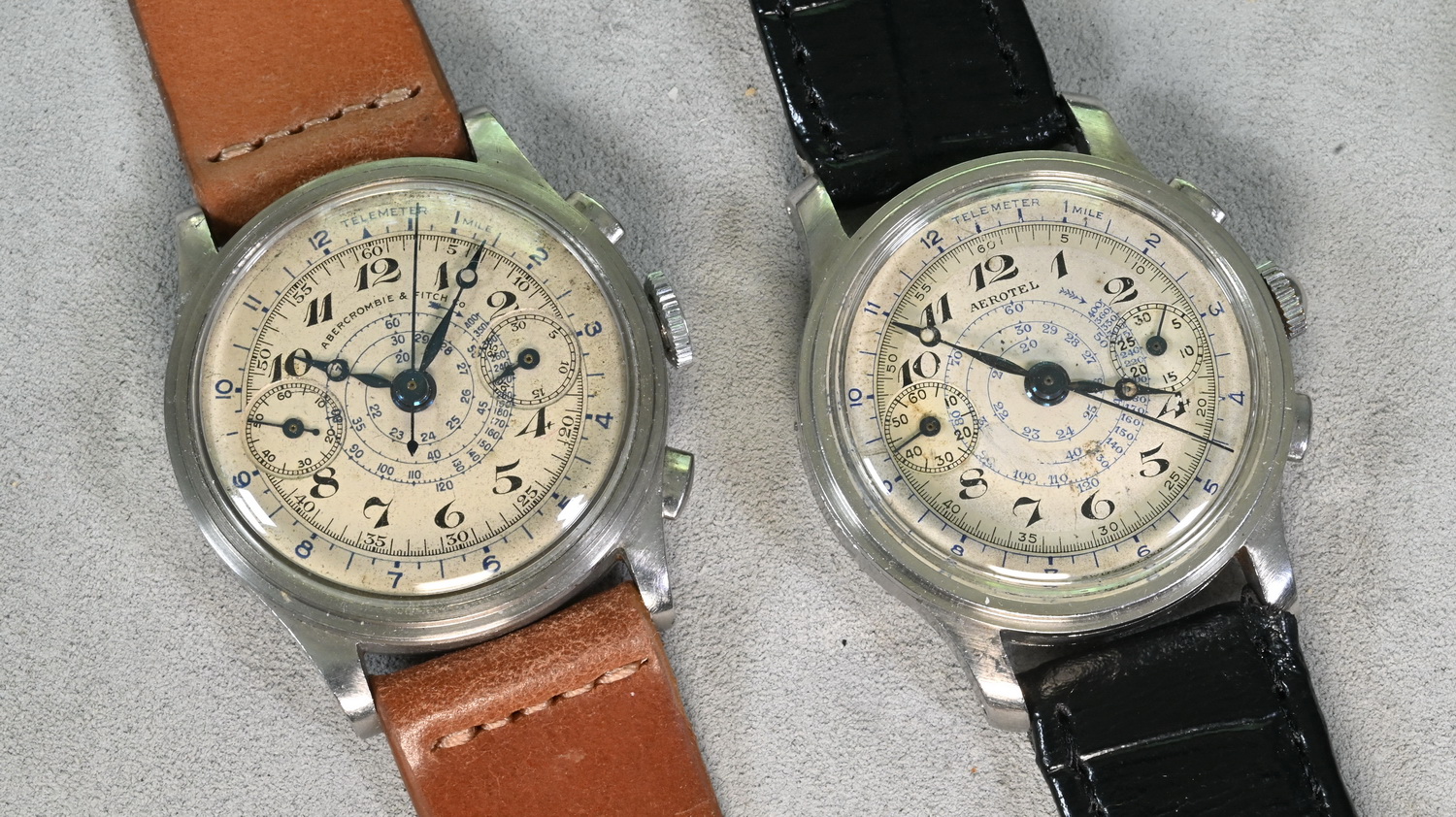
Aerotel Chronograph, Heuer Reference 2403, Tachymeter / Telemeter Dial
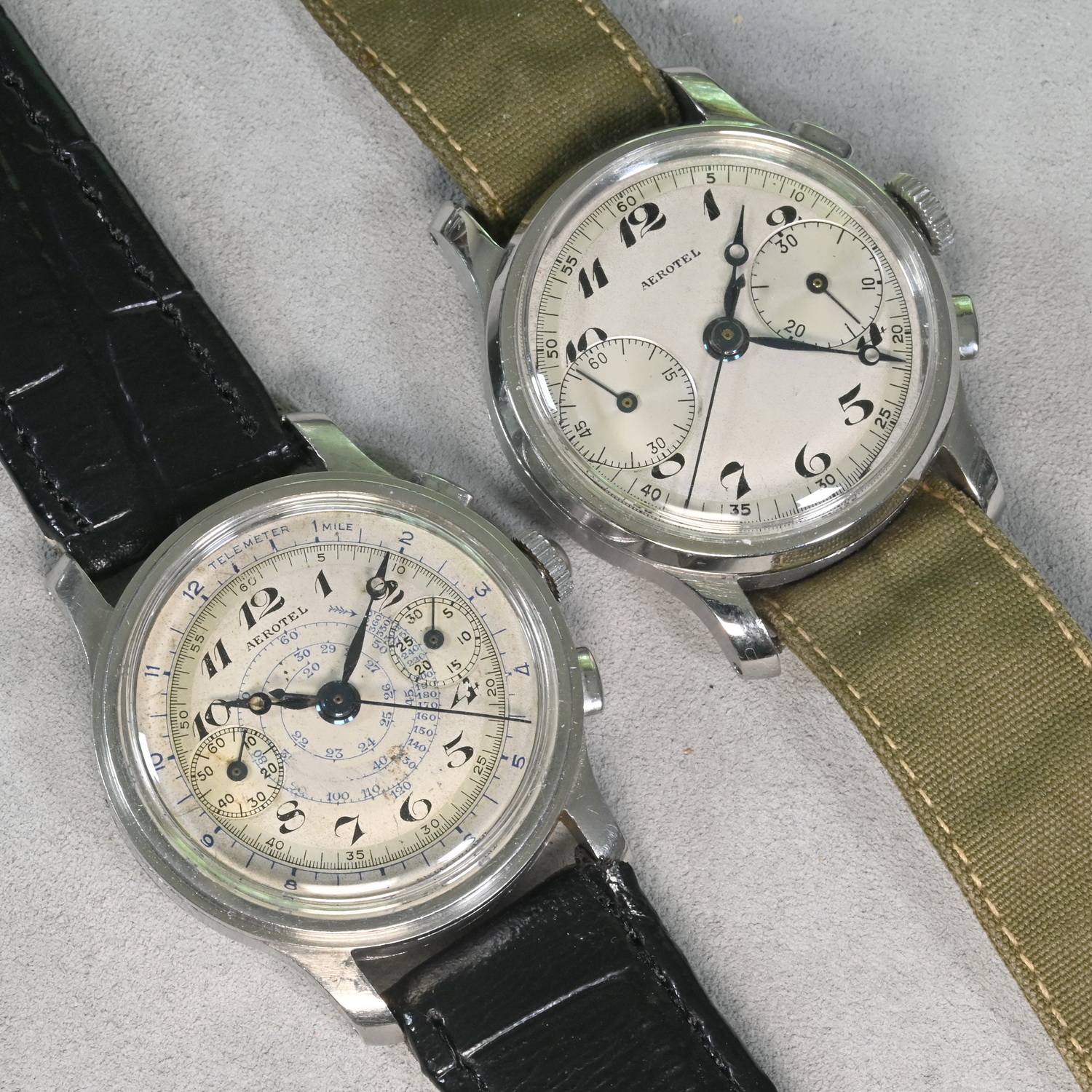
Aerotel was an American watch distributor located in California and, in the late 1930s and early 1940s, we see Heuer producing a variety of chronographs and other timepieces for the company on a private-label basis.
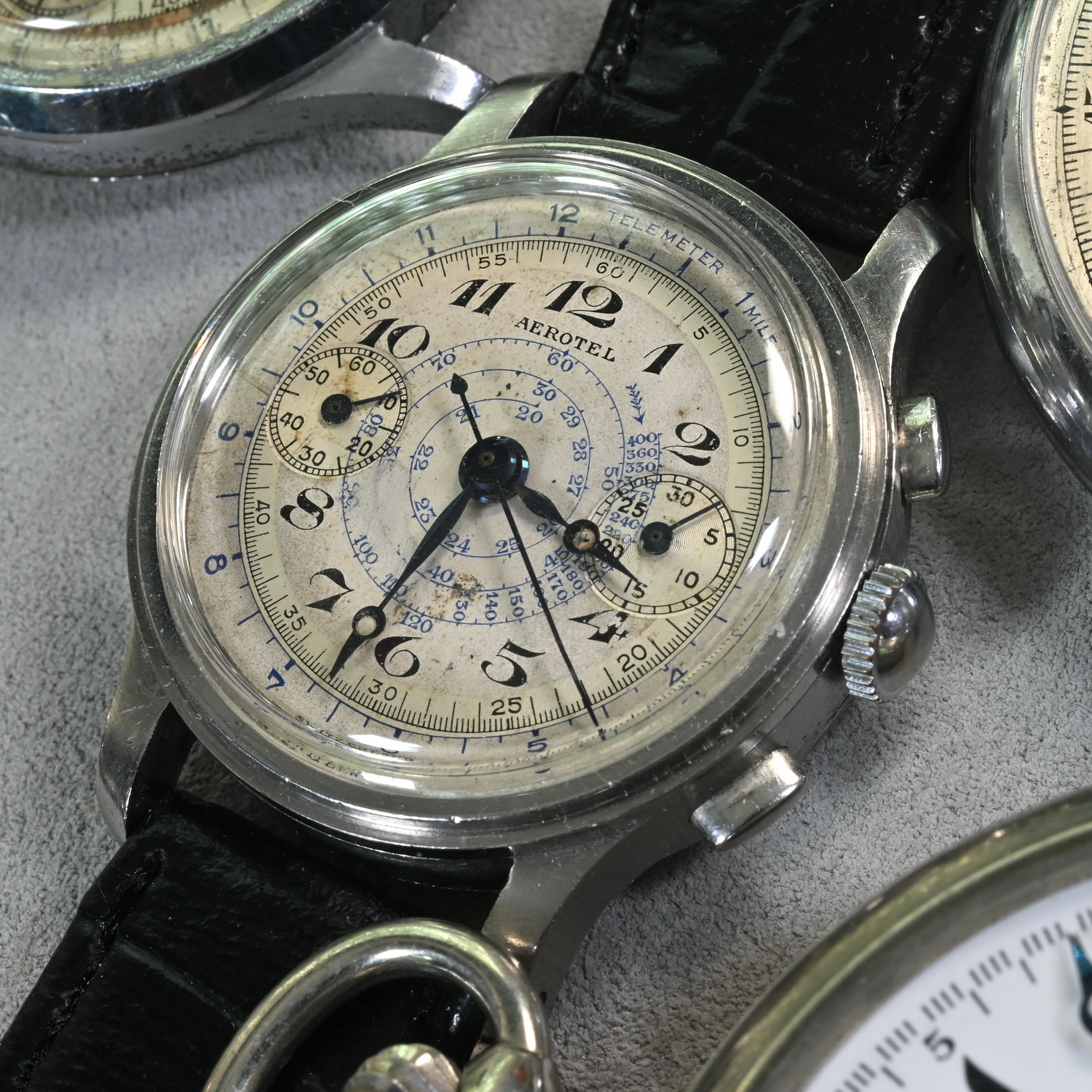
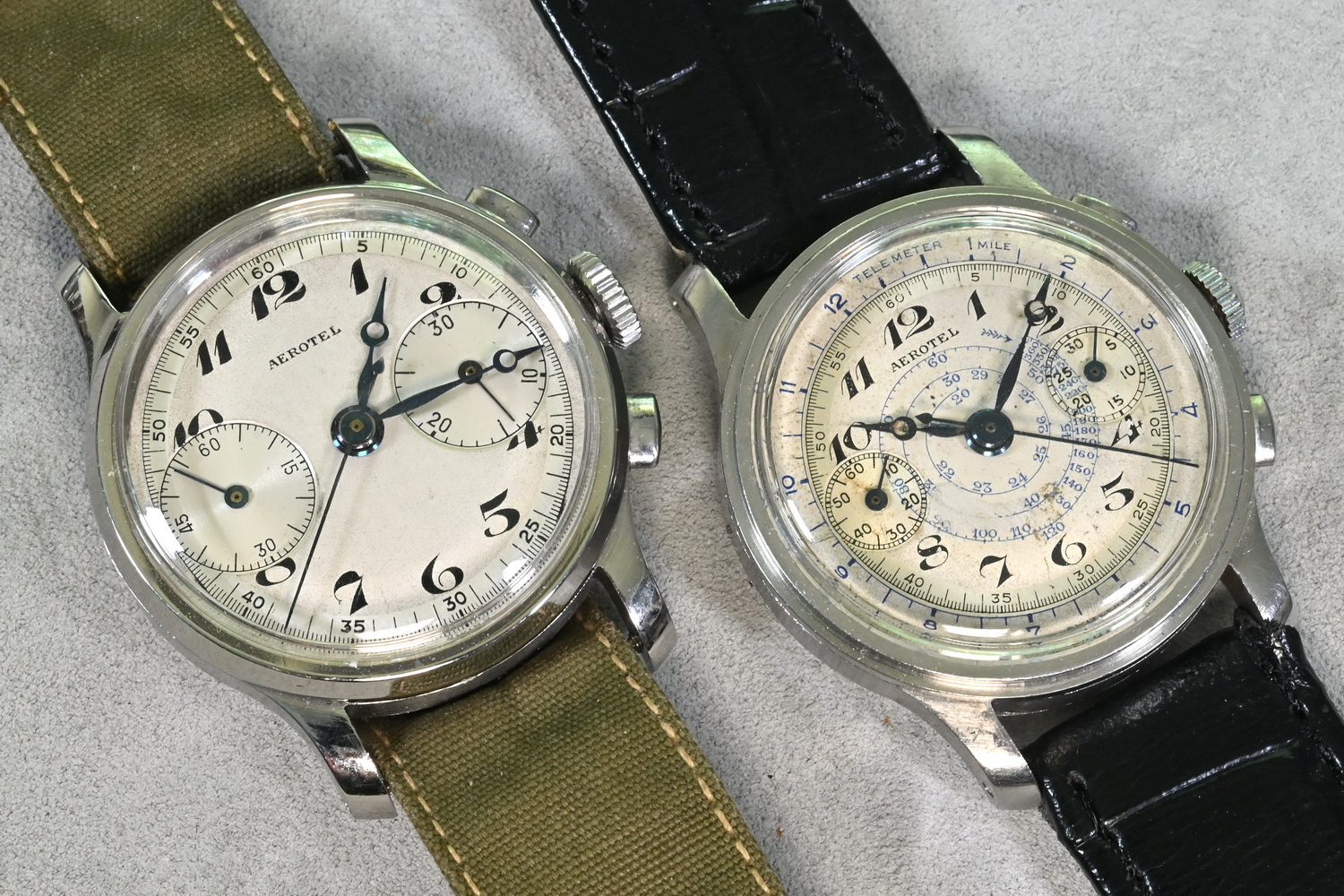
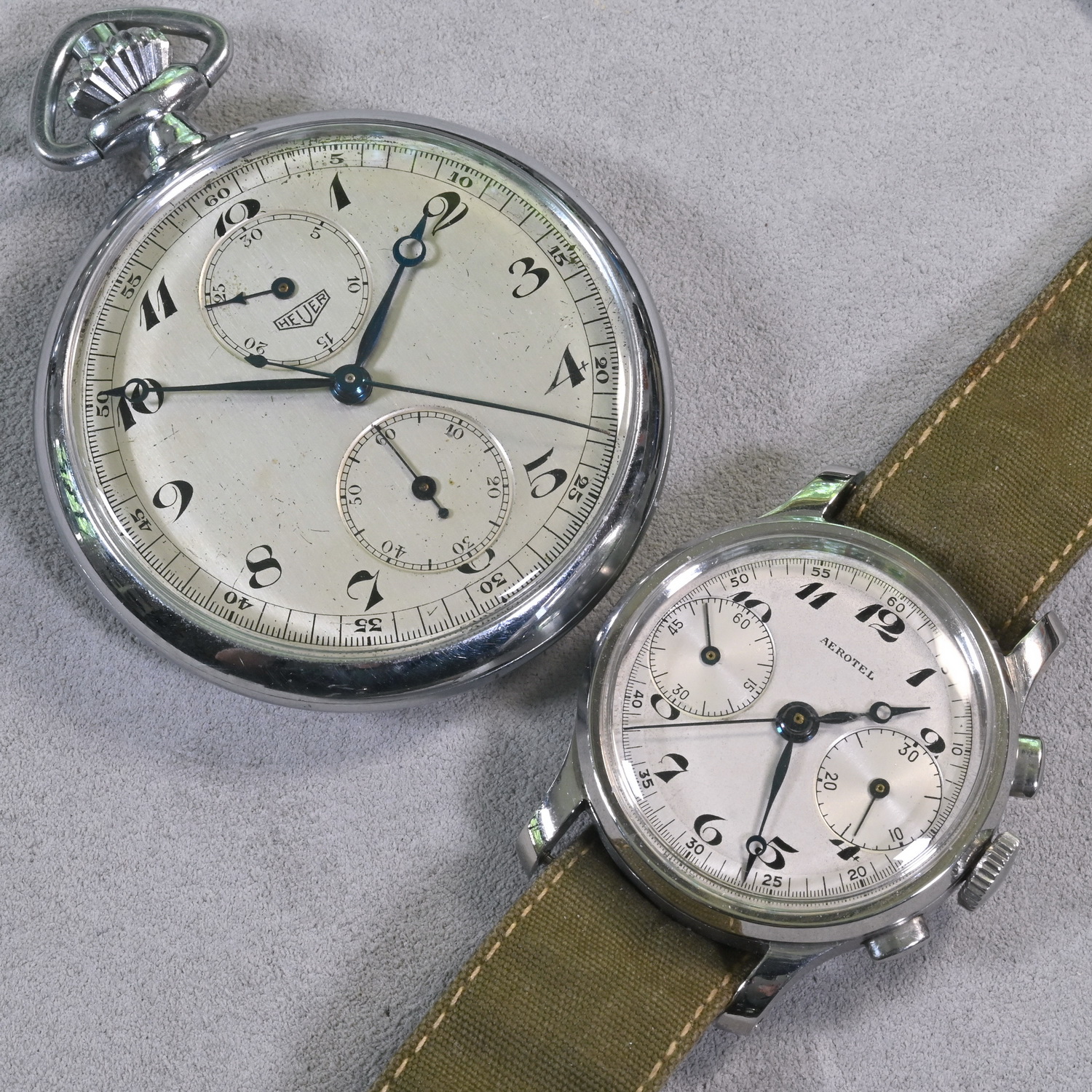
The Aerotel version of the Reference 2403 Tachymeter / Telemeter chronograph appears to be almost identical to the Abercrombie & Fitch version, except that there is a slight difference in the style of the chapter rings. The Aerotel chronograph even includes the elaborate “stepped” bezel, like the Abercrombie & Fitch model.
Aerotel Chronograph, Heuer Reference 2403
If the Reference 2403 Tachymeter / Telemeter chronographs made by Heuer for Abercrombie & Fitch and Aerotel demonstrate how ornate the Breguet style dials could be, this Reference 2403 chronograph made for Aerotel is a study in simplicity.
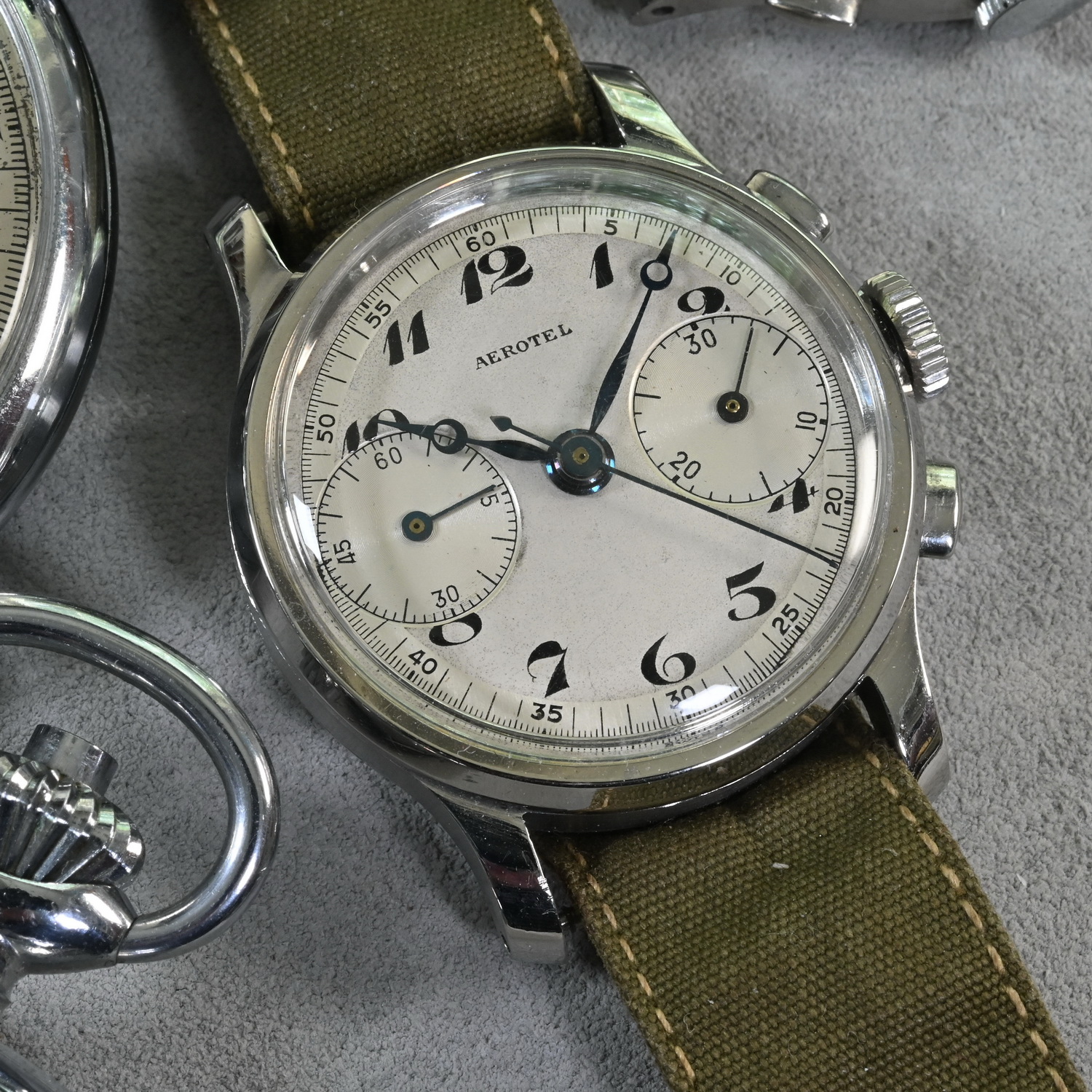
The tachymeter / telemeter scales are deleted from the dial, and the stepped bezel is replaced by a simple “a biseau” (beveled edge). With the surplus of real estate on the dial, Heuer increased the size of the registers, offering excellent legibility.
See additional photos of this chronograph in our OnTheDash Gallery HERE.
Heuer Reference 701 Pocket Chronograph
From its earliest days, Heuer produced pocket chronographs for sporting, industrial and scientific uses, including both standard models and models with the split-second (rattrapante) complication. Heuer also sold its movements to other manufacturers, that assembled timepieces. In 1887, Heuer patented a new style of vertical clutch to engage and disengage the chronograph mechanism, incorporating an oscillating pinion. Heuer’s movements that incorporated the oscillating pinion were called the “Heuer 5” movements, and Heuer continued to use these movements into the 1930s.
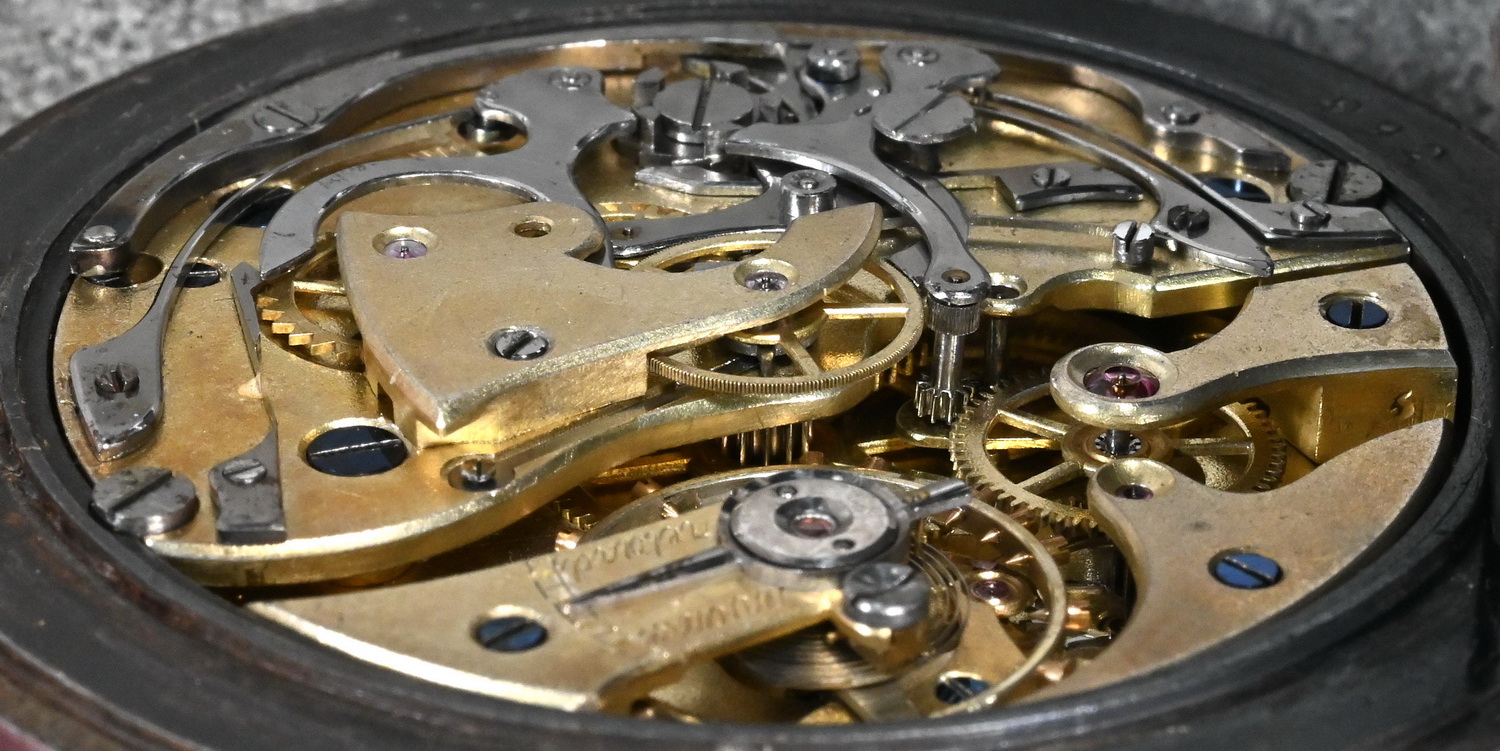
In the mid-1930s, Heuer introduced the Reference 701 pocket chronograph, and Heuer would continue to produce this model into the 1960s. The Reference 701 model shown here has the 17 ligne version of the Heuer 5 movement, allowing Heuer to use a sleek case measuring 48.6 millimeters across the dial and having a thickness of 13.5 millimeters. Later versions of the Reference 701 pocket chronograph would use movements supplied by Valjoux, including the Valjoux 61.
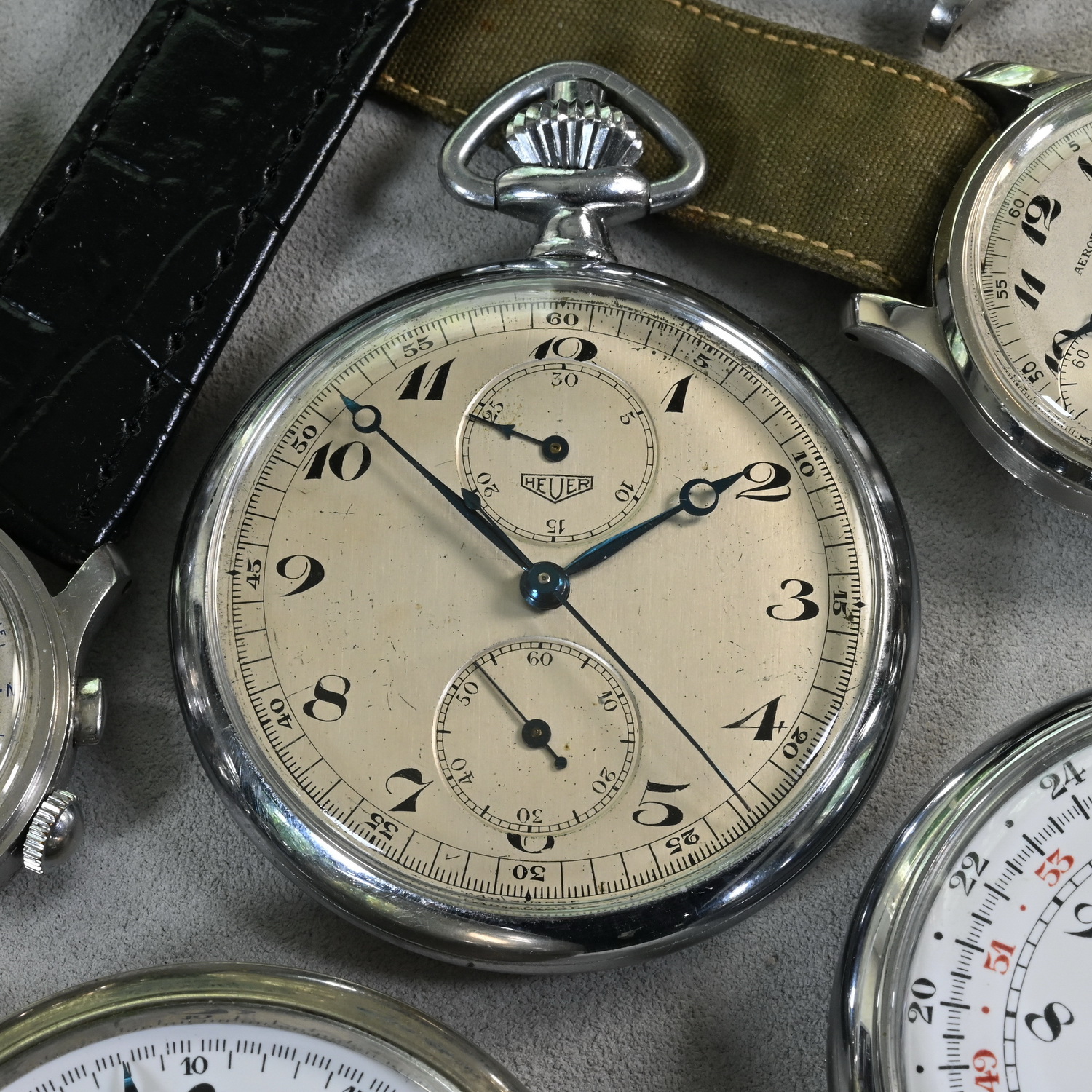
Just as Heuer used dials with minimal decoration for some of its Reference 2403 chronographs, the Reference 701 with Breguet numerals shows how this clean design can be used for pocket chronographs.
See 14 additional photos of this Reference 701 pocket chronograph HERE.
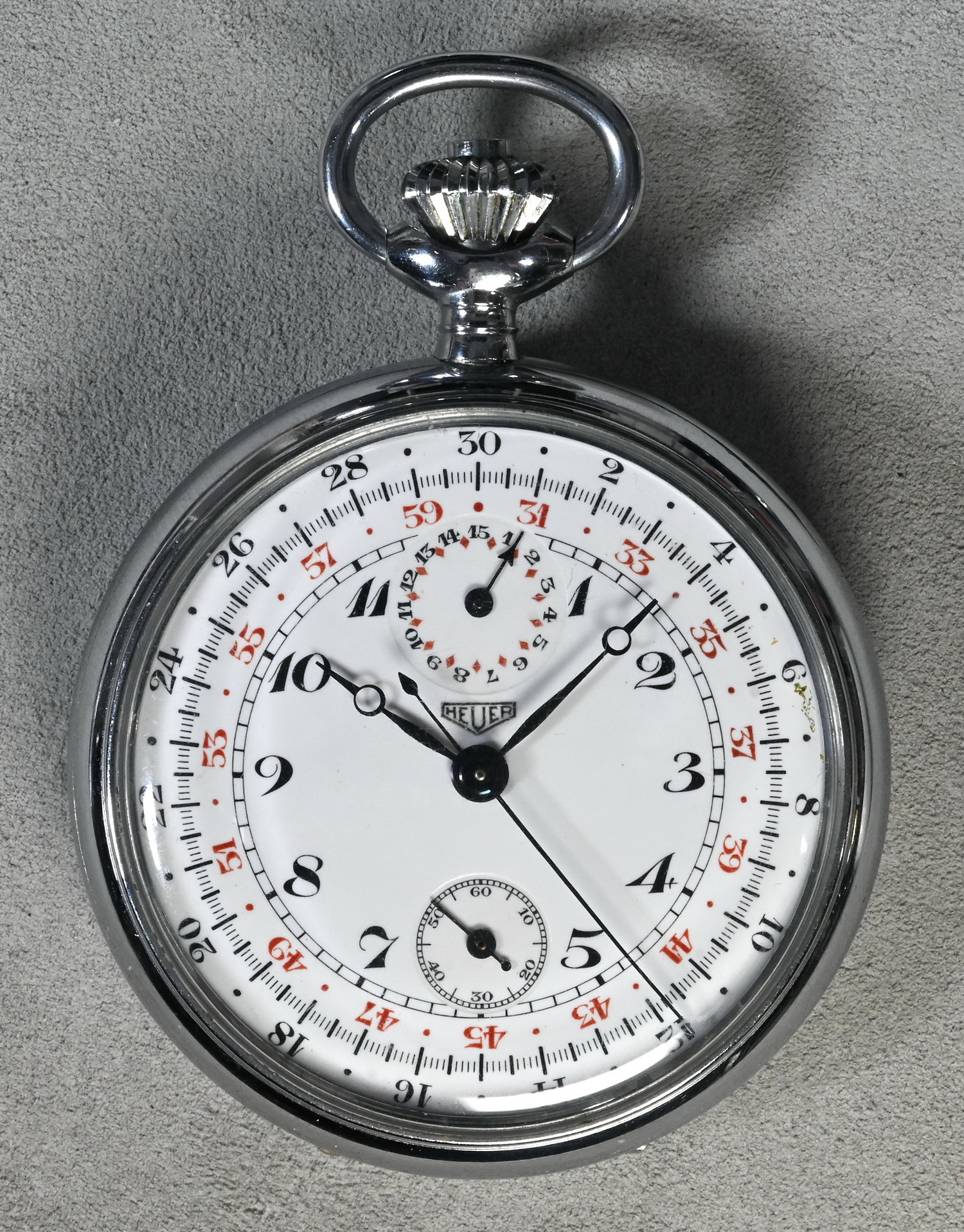
Heuer Reference 720 Pocket Chronograph
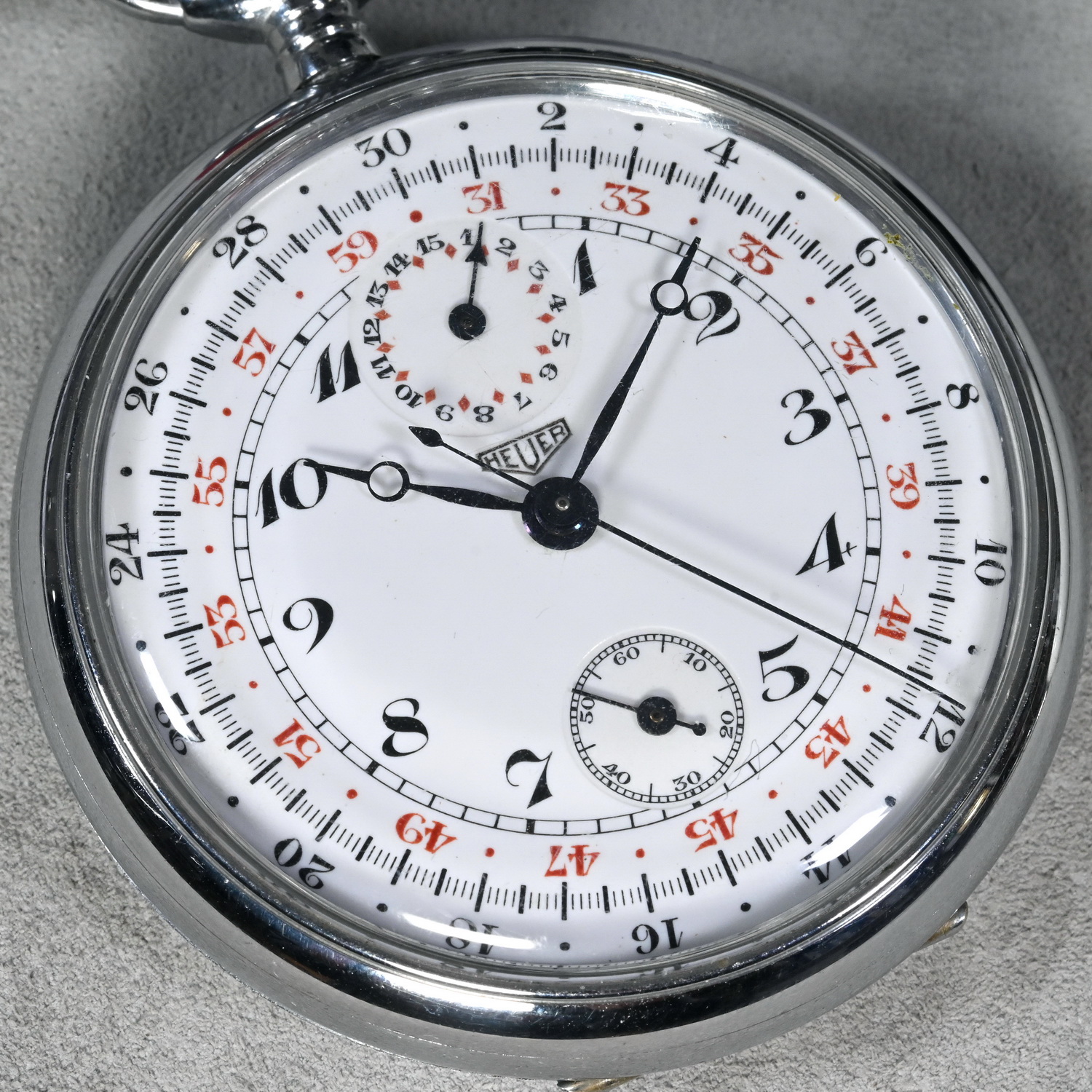
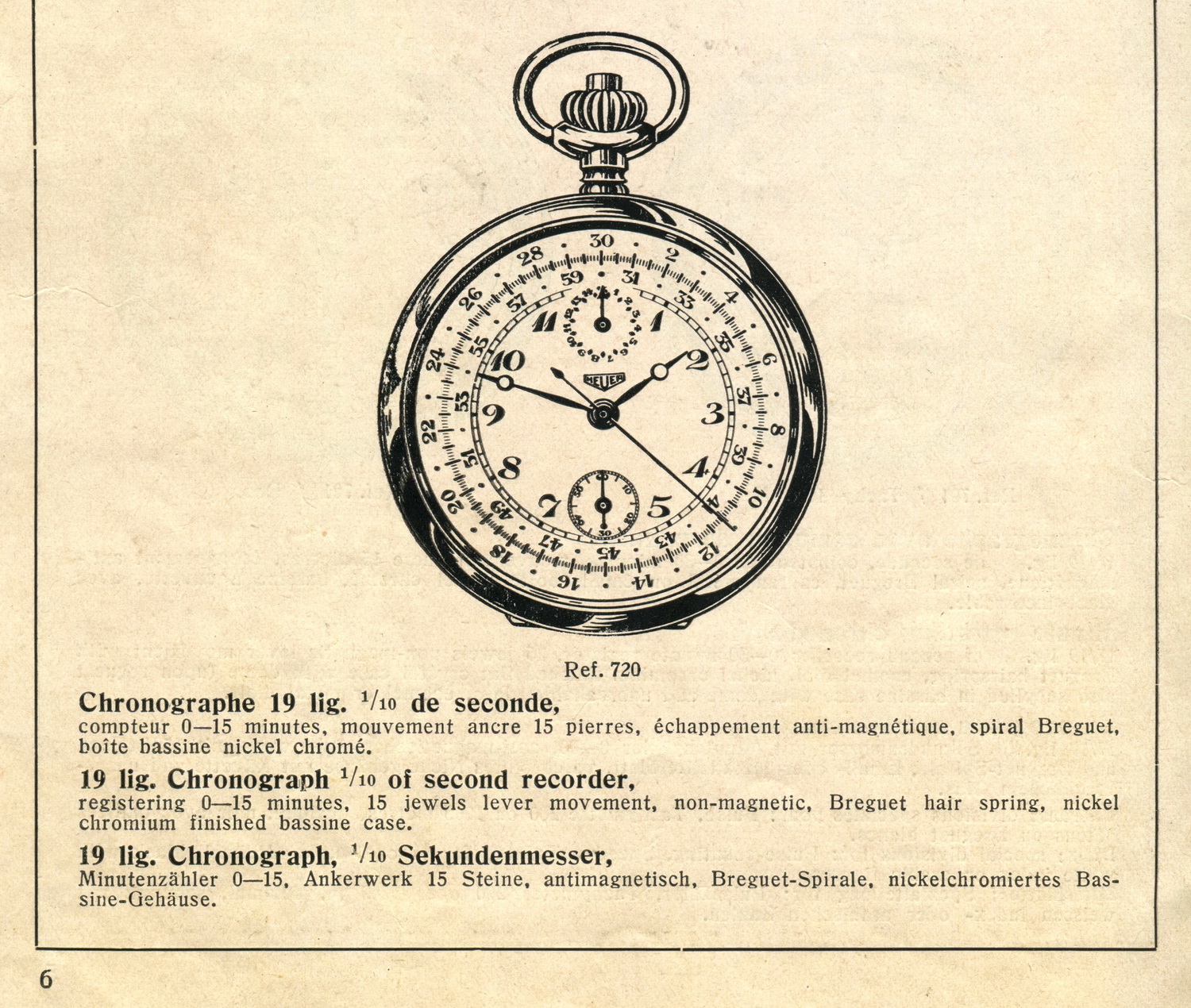
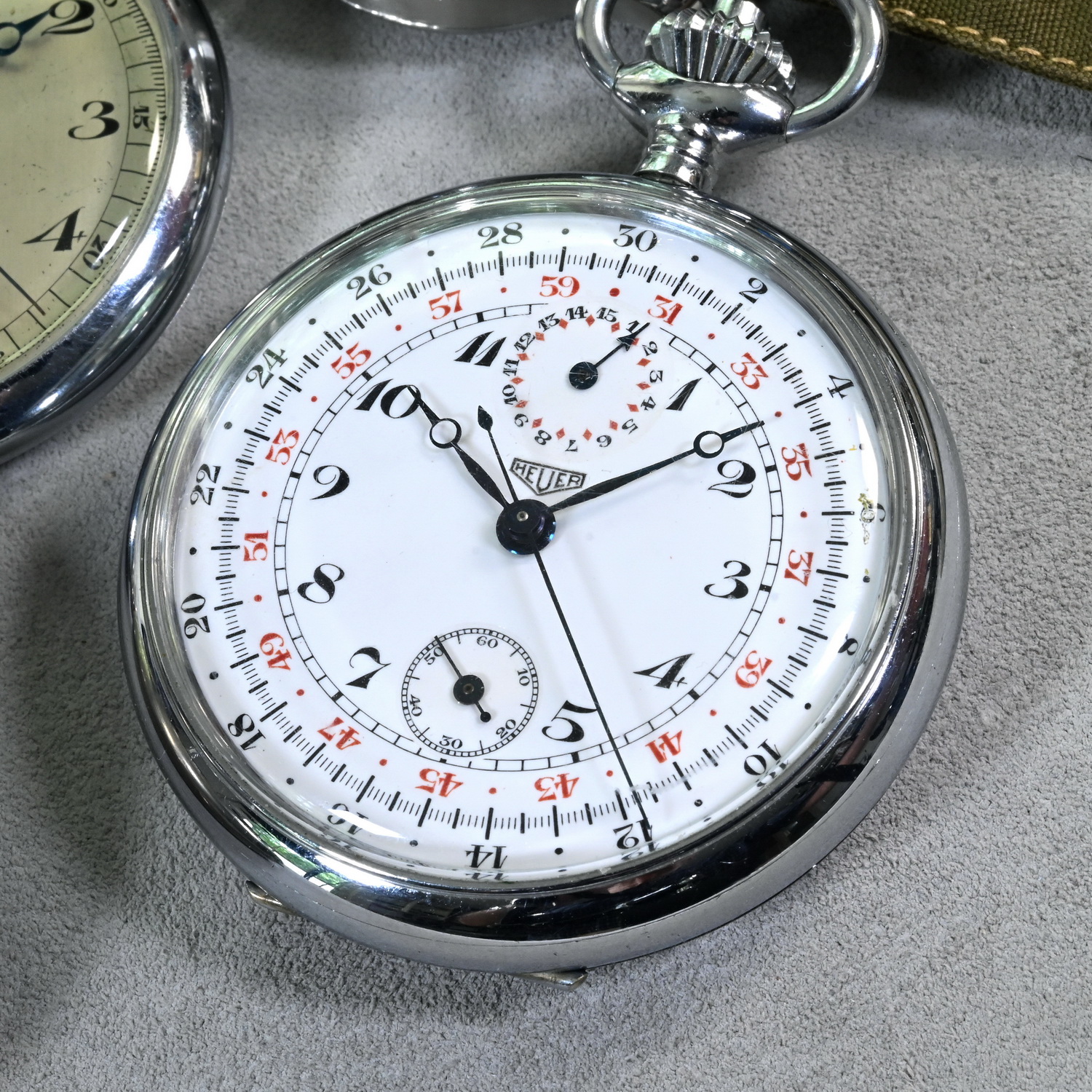
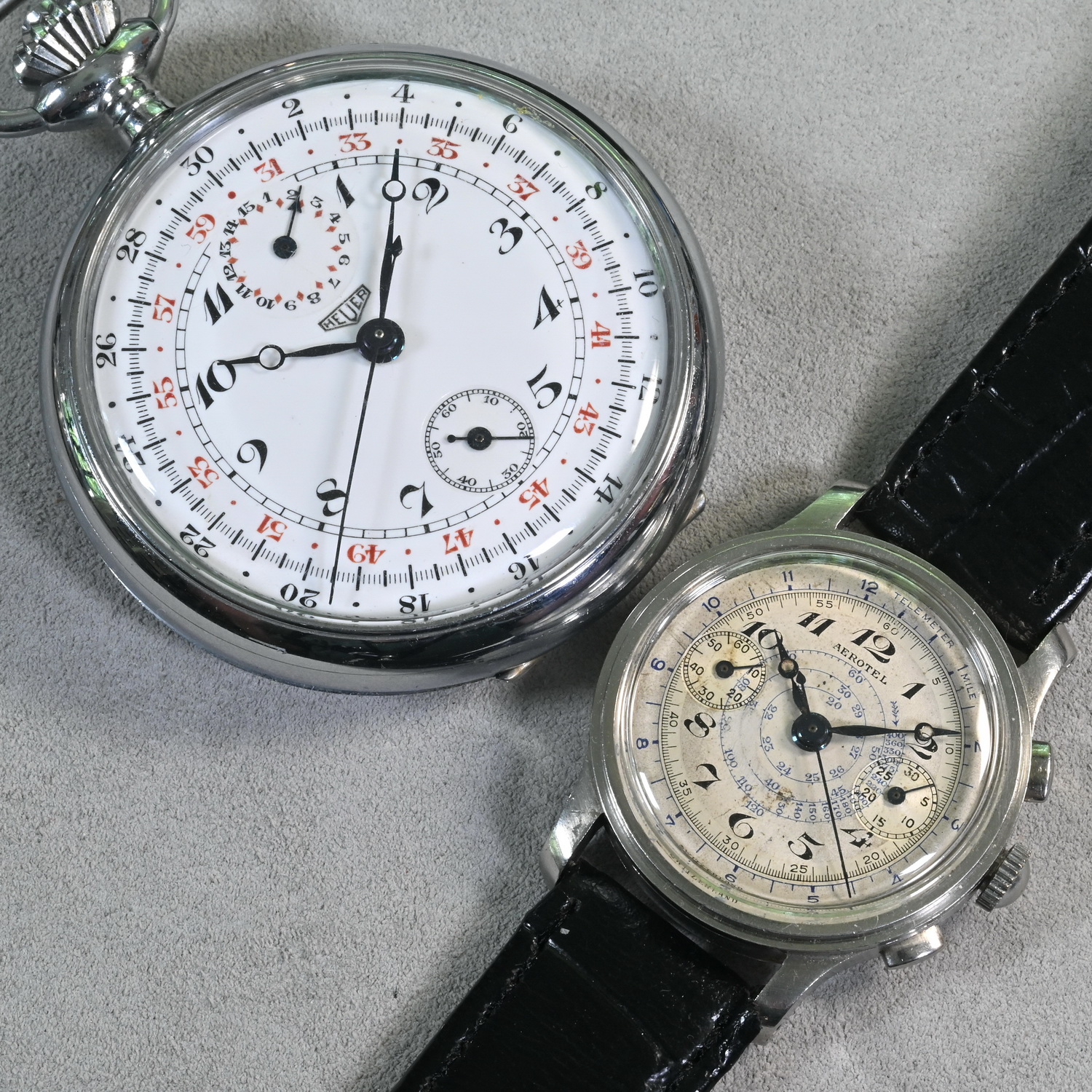
Heuer’s Reference 720 pocket chronograph offers an interesting variation on the Reference 701, shown above. The Reference 720 uses a high-beat movement and a chronograph seconds hand that rotates around the dial twice per minute (i.e., in 30 seconds, rather than the usual 60 seconds) to offer 1/10 second timing. Notice the two scales on the dial, with 0 to 30 seconds printed in black and 30 to 60 seconds printed in red.
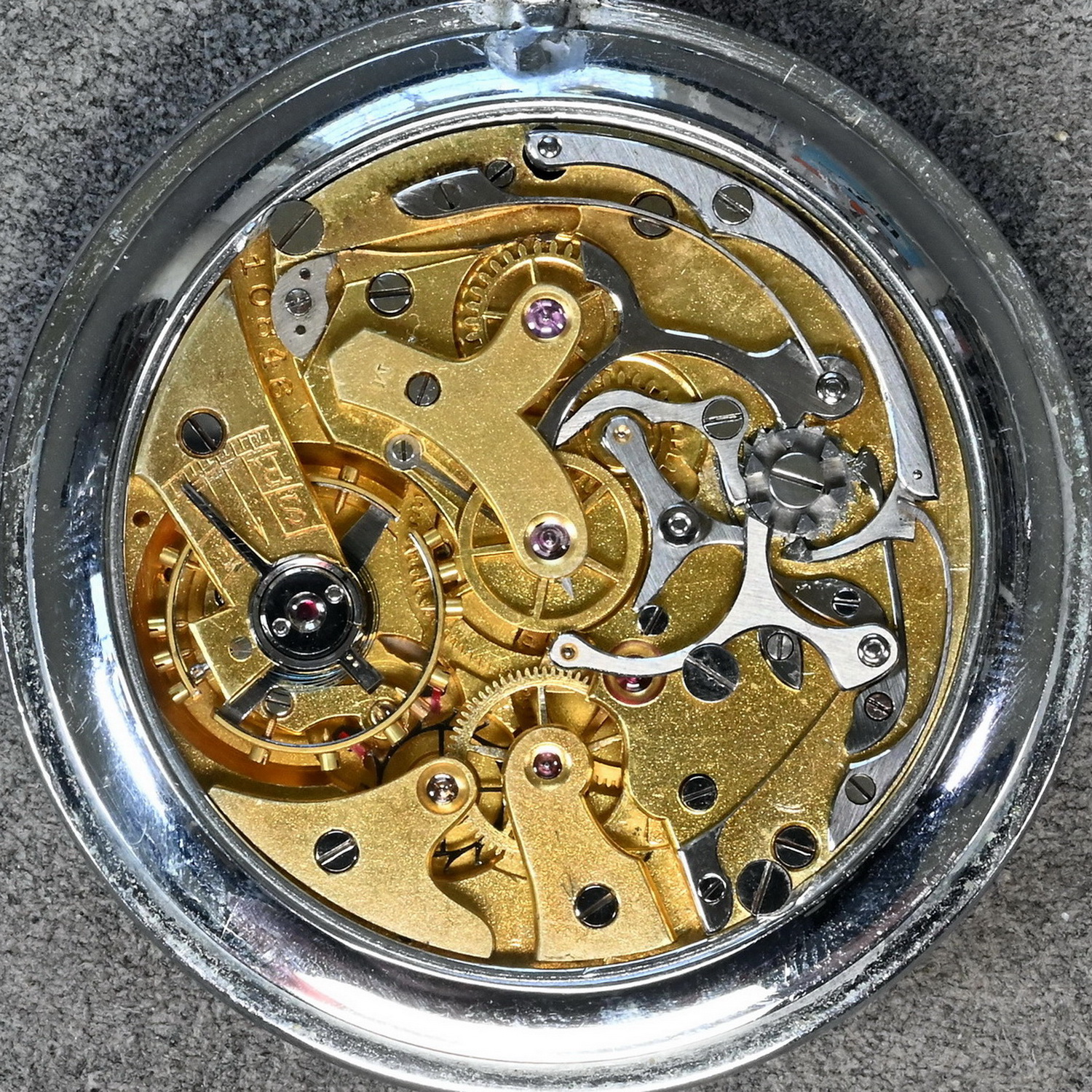
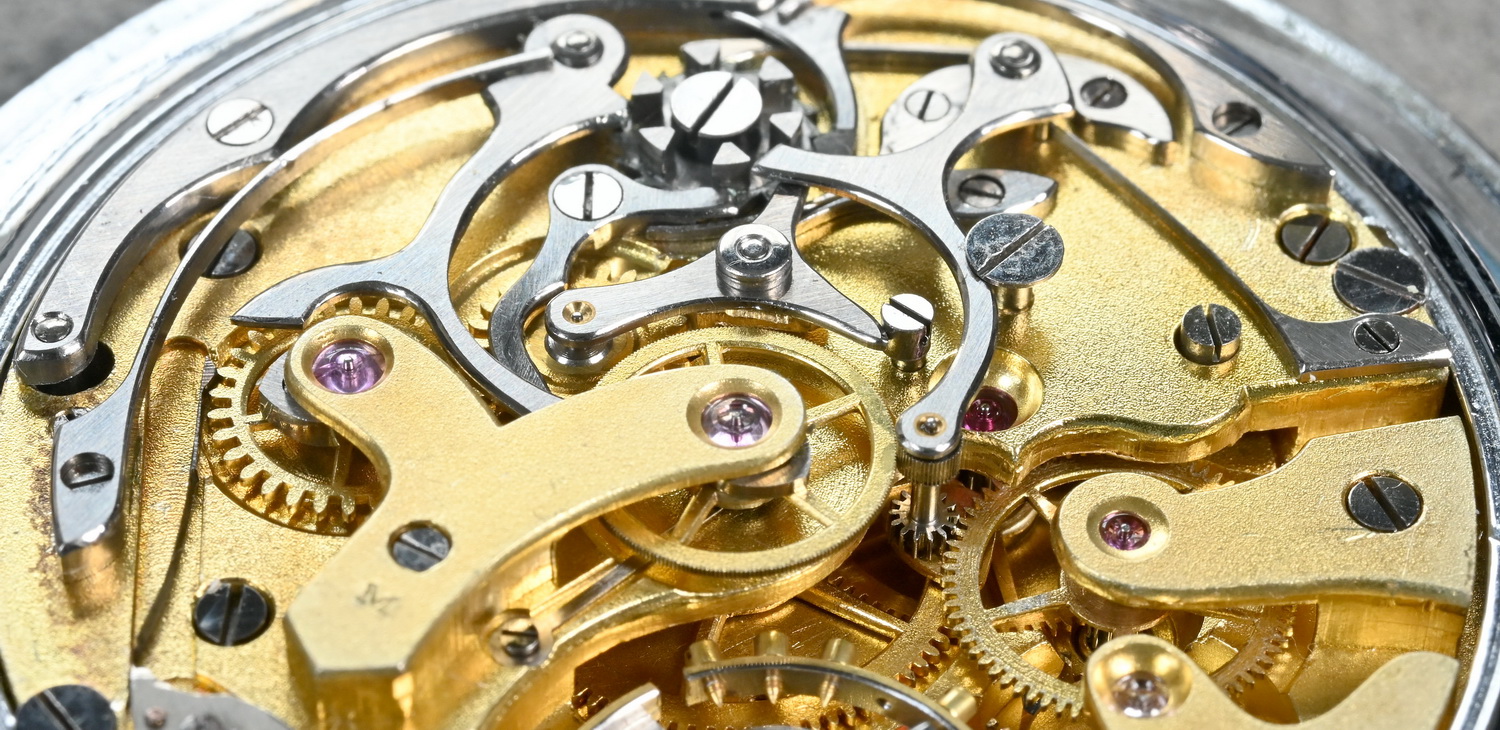
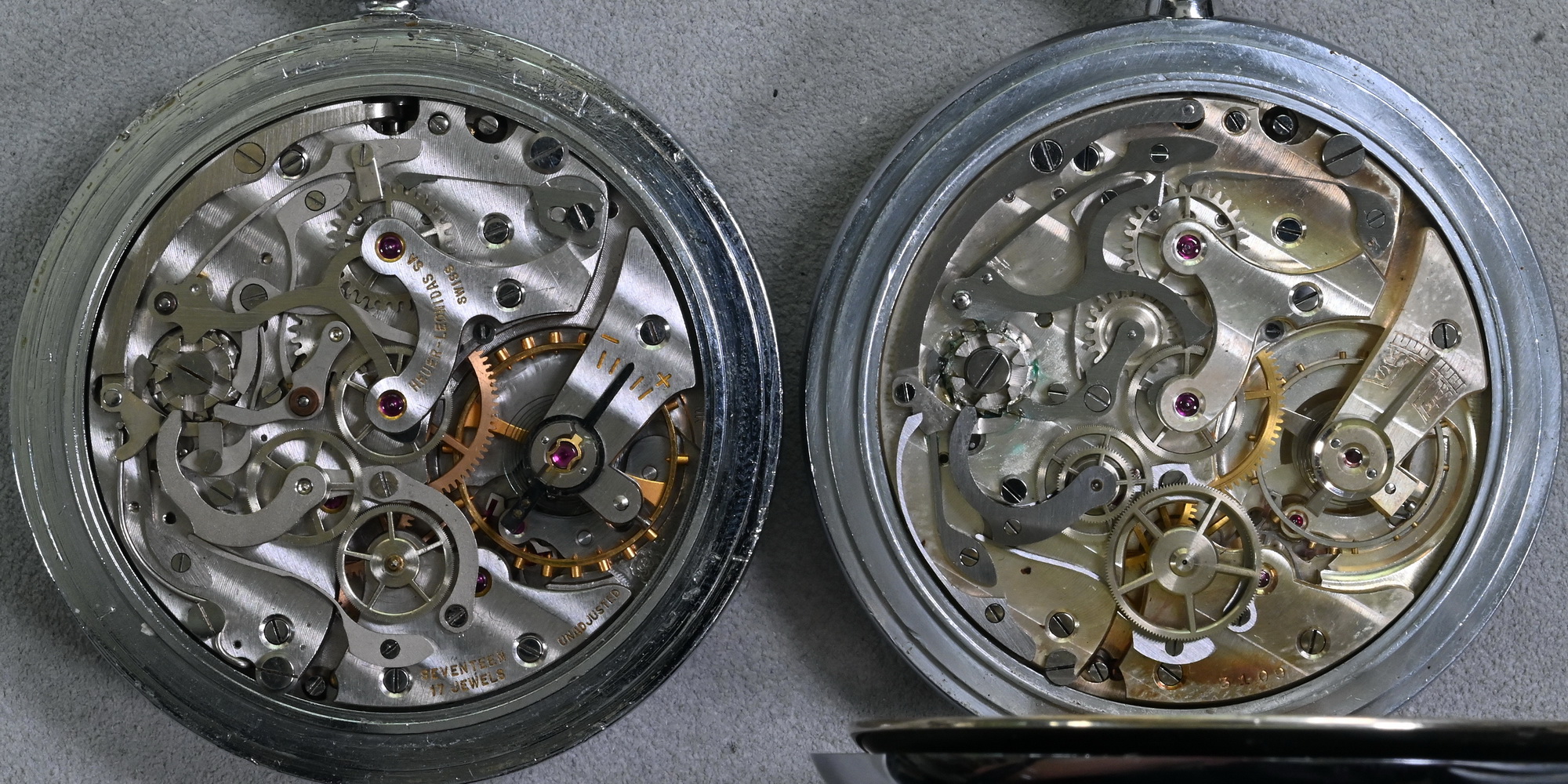
The movement used in the Reference 720 pocket chronograph is a Valjoux 5, modified for the 1/10 second, high-beat timekeeping. The photo below shows a standard Valjoux 5 movement on the left, and the modified Valjoux 5 movement used for the Reference 720 on the right.
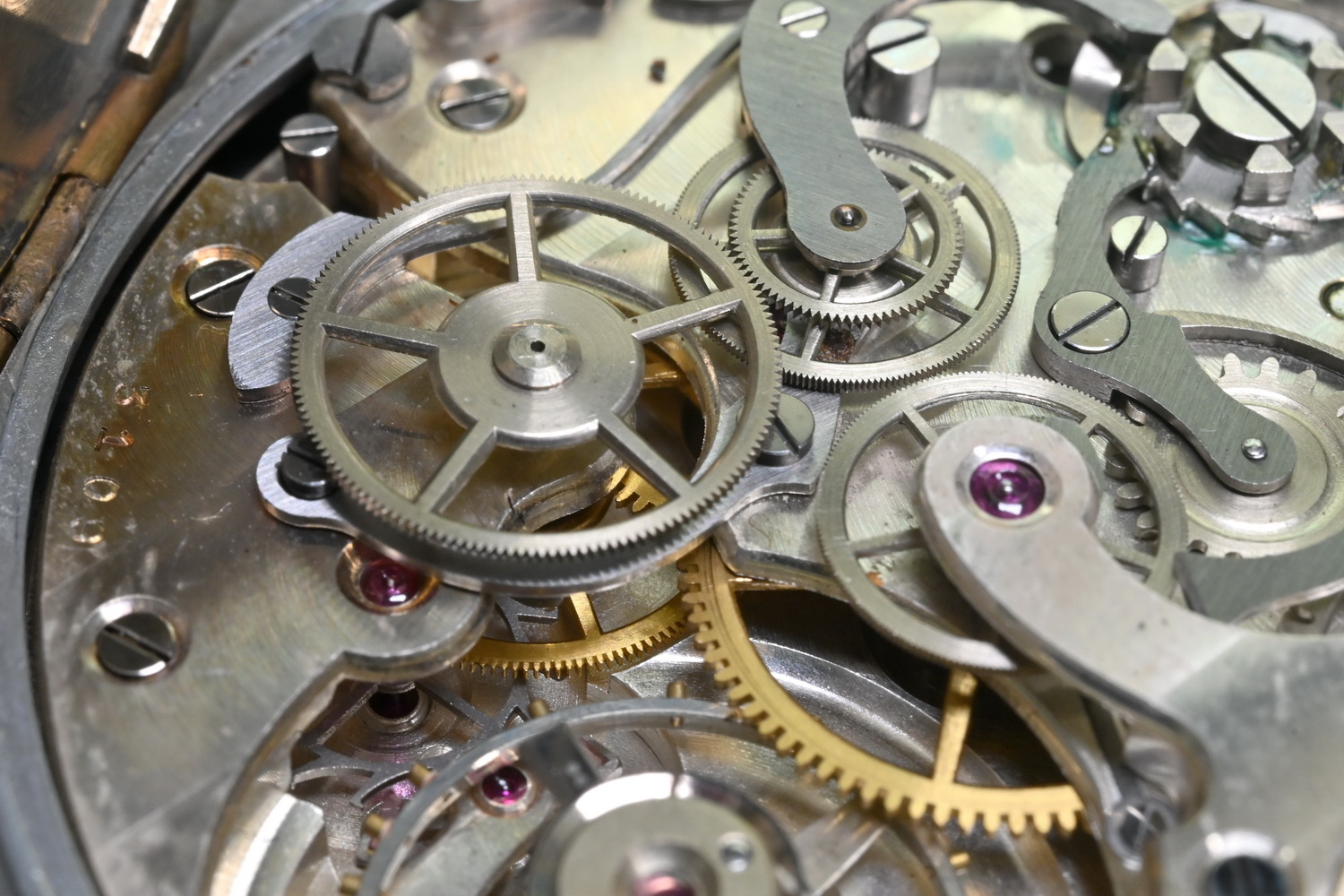
Below is a photo showing the two wheels on the clutch. The fourth wheel (on the left) drives the smaller wheel on the clutch, so that the center chronograph wheel is rotating at twice the speed of the fourth wheel. This is how the running seconds hand rotates once per minute, while the chronograph seconds hand rotates twice per minute.
The Reference 720 appeared in Heuer’s 1936 catalog, and seems to have have a short production run, as we don’t see the model in any of Heuer’s subsequent catalogs. 1/10 second pocket chronographs would only return to Heuer’s catalog in the mid-1960s.
See 12 additional photos of this Reference 720 pocket chronograph HERE.
Heuer Reference 201 Split-Second (Rattrapante) Pocket Chronograph
The Reference 701 is sleek, and the Reference 720 provides 1/10 second timing, but the Reference 201 pocket chronograph offers the “queen of complications” for chronographs, split-second (rattrapante) timing. Among other uses, in a race or rally, a split-second stopwatch or chronograph allows a team member or race official to determine the time differential between two competitors, while the chronograph continues to run. (For more about split-second timing, see our posting from 2024, introducing the TAG Heuer Monaco Split-Seconds chronograph HERE.)
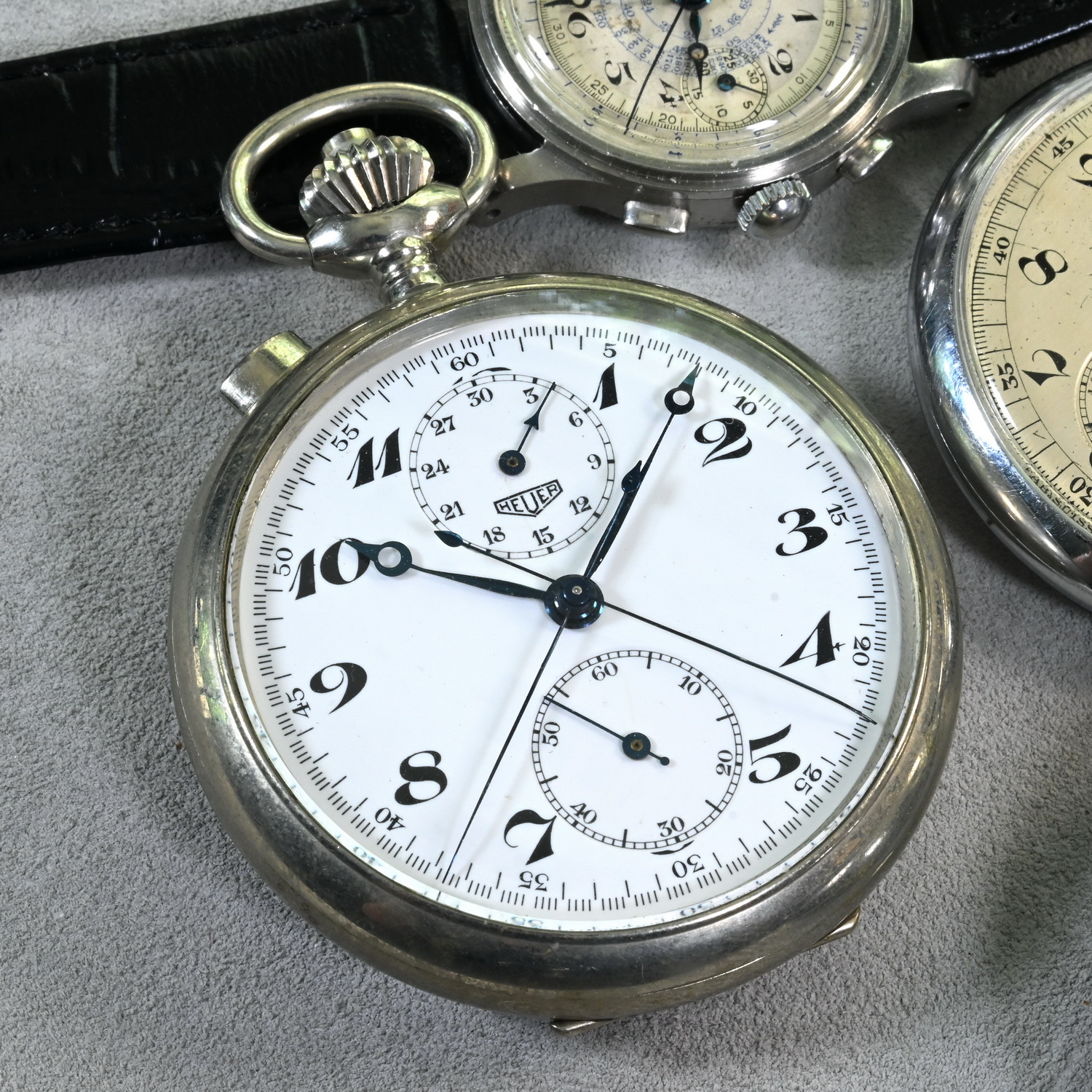
This polished nickel case of the Reference 201 split-second chronograph is large, measuring 52.5 millimeters across the dial, with a thickness of 17.3 millimeters. The 19 ligne movement (41 millimeters) appears to be a transitional movement, combining the Heuer 5 base movement with a rattrapante mechanism most likely made by Valjoux. After 50 years of service, Heuer would soon retire the Heuer 5 movement, as it began to use Valjoux for all its pocket chronograph movements.
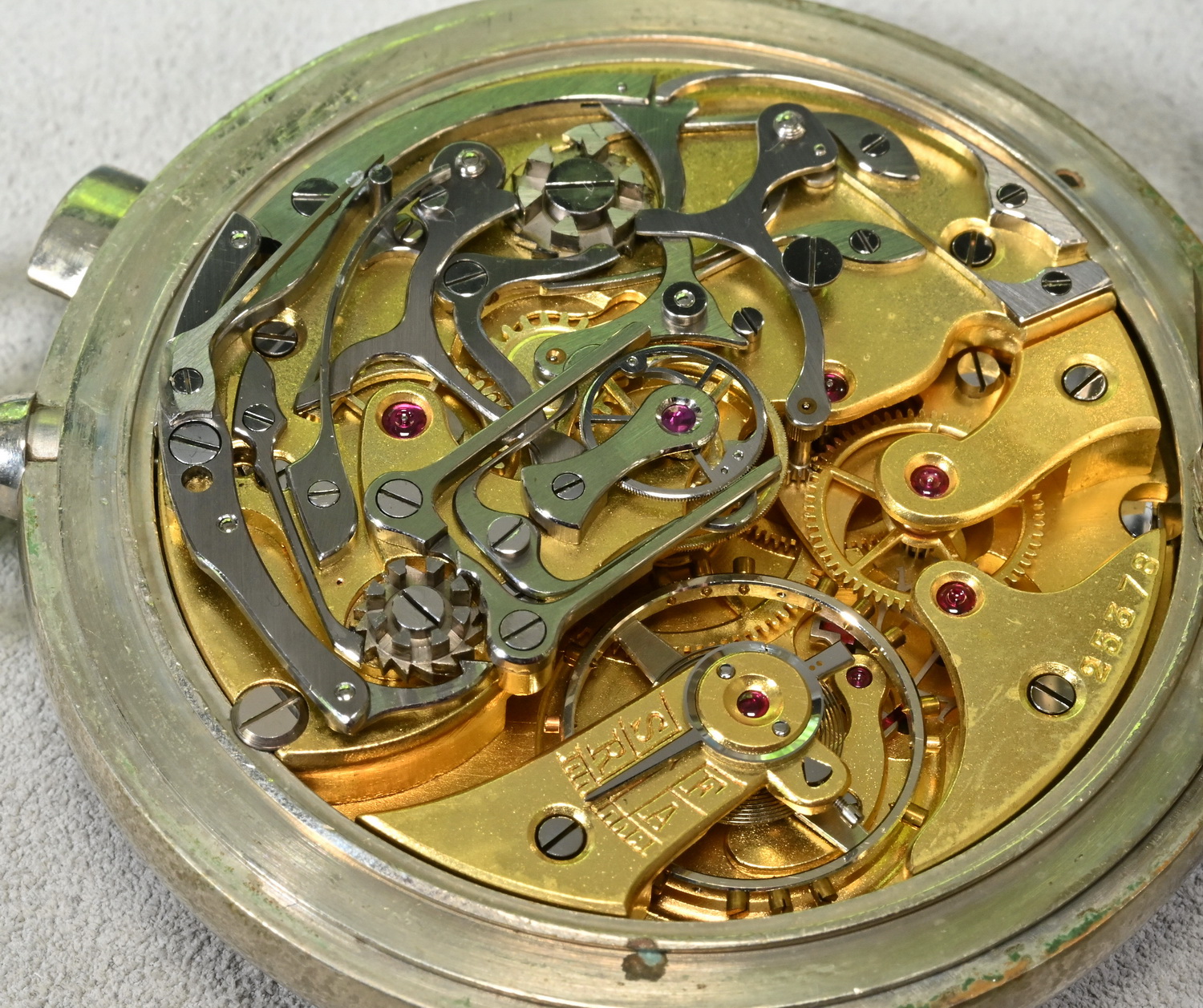
See 10 additional photos of this Reference 201 split-second pocket chronograph HERE.
Heuer’s Breguet Era
The 1930s were a crucial decade for the development of Heuer as a leading maker of chronographs and other timepieces for sports, industry and science. Over this decade, the company greatly expanded its catalog, adding many new styles and movements. No doubt, having the very attractive selection of timepieces incorporating the Breguet style, used in both wrist chronographs and pocket chronographs, enhanced Heuer’s competitive position, and positioned it well for future years.
In future postings, we will examine other styles that Heuer used in subsequent decades, seeing how strong design codes reflecting contemporary styles and good construction always positioned the brand for success.
Jeff Stein
May 7, 2026