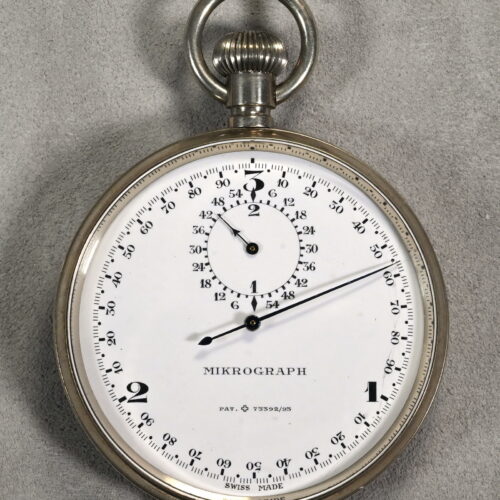
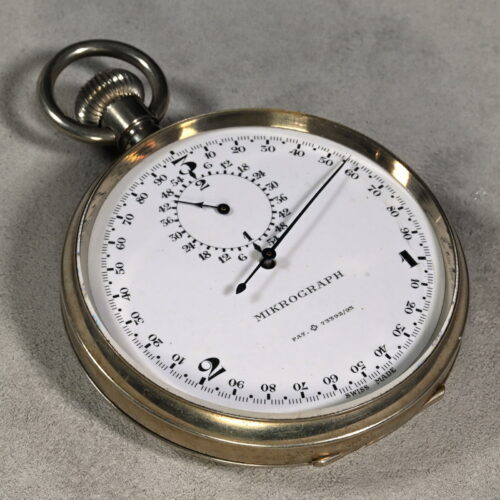
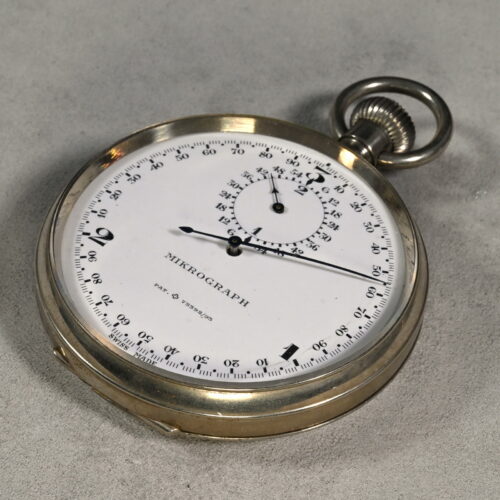
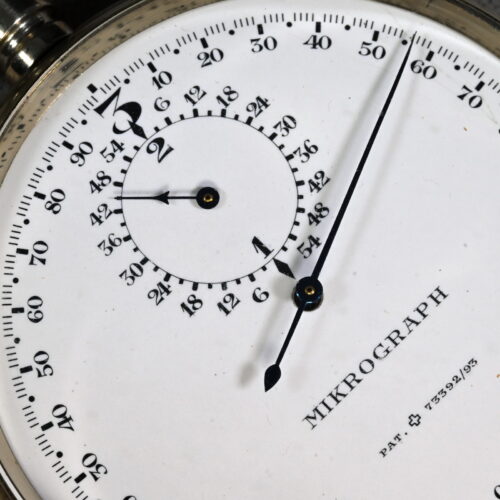
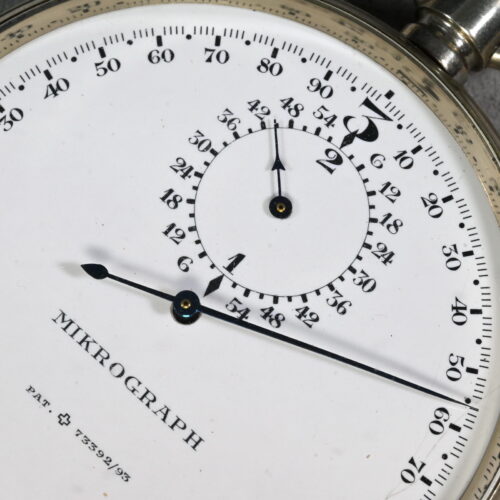
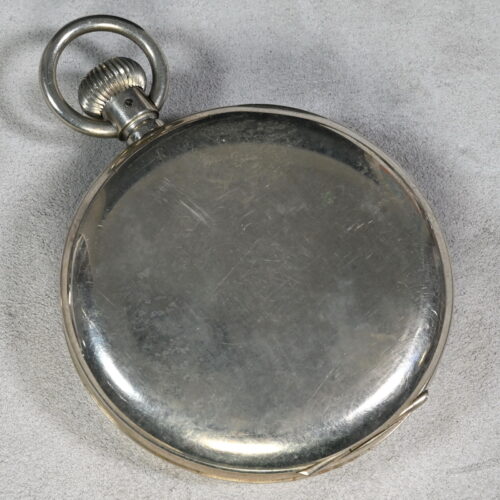
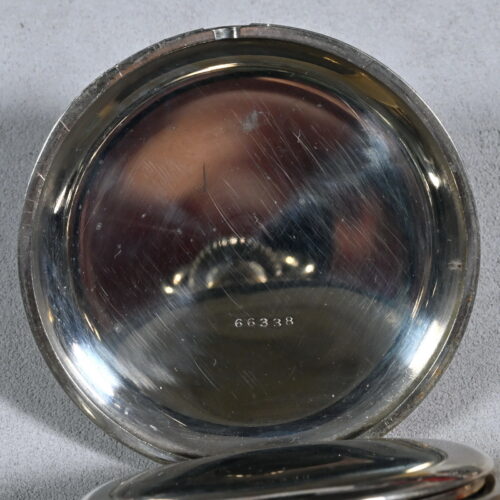
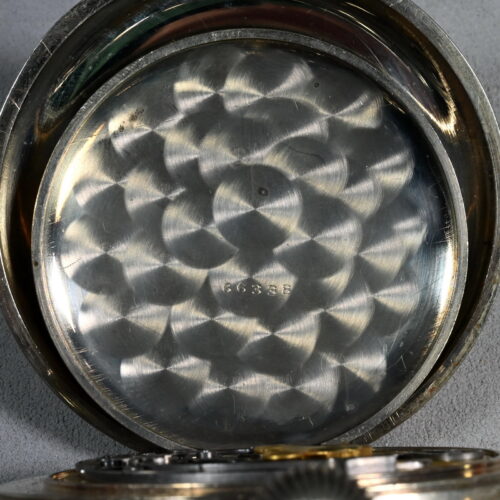
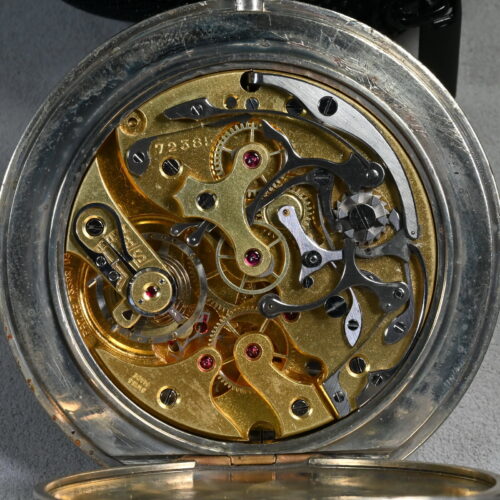
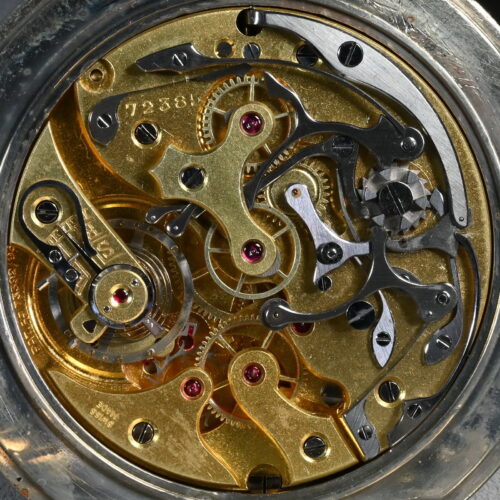
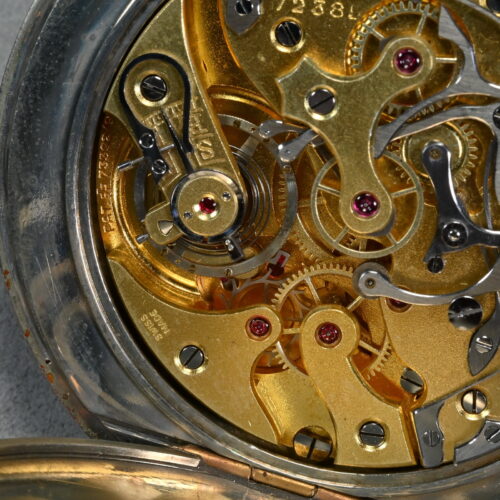
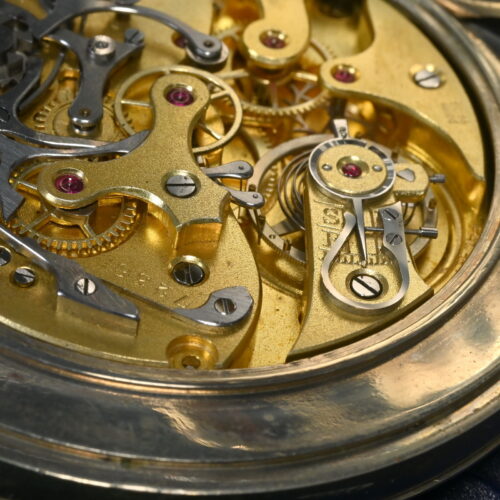
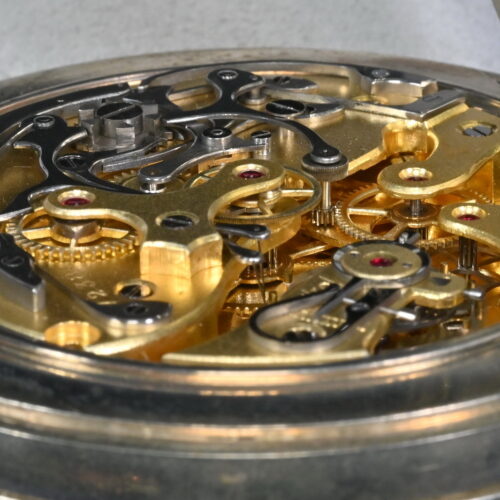
Introduced circa 1915, Le “Mikrographe” (which we will call the “Mikrograph”, as this was the name that would appear on the dial within a few years) offered 1/100 second timing. Early versions of the Mikrograph had a display of 3 minutes; this was soon changed to a display of two minutes.
The Mikrograph used a three-function crown — in addition to winding the stopwatch, successive pushes of the crown start the timing, stop the timing and reset the stopwatch to zero.
In the early versions of the Mikrograph, when the stopwatch is wound and has been reset to zero, the balance wheel continues to “run”, even though the hands are stopped; the oscillating pinion is used to engage the stopwatch second hand “on the fly” (i.e., with the balance wheel running), to ensure the quickest possible start. It is only when the stopwatch is stopped that the balance wheel stops running.